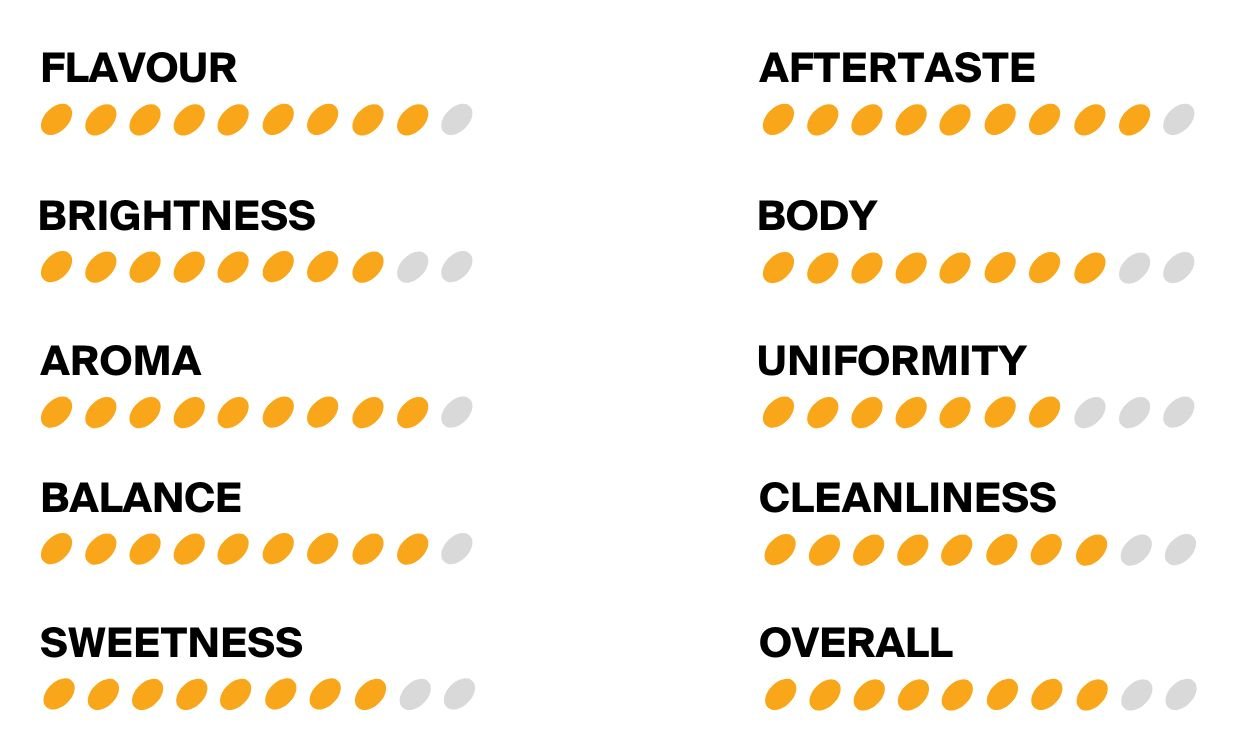
Trading Post Coffee Roasters Decaf
Trading Post Coffee Roasters is a proudly independent, family-run coffee business based in Brighton.

About Trading Post Coffee Roasters Decaf
Launched in January 2017 with their first open-view roastery and coffee bar on Ship Street. They have grown to operate 10 coffee houses across Sussex and the South Coast, whilst supplying hundreds of wholesale partners throughout the UK including prestigious venues like Arundel Castle and University of Brighton Students’ Union. Led by a Master Roaster with three generations of coffee roasting heritage, Trading Post maintains the highest training standards for their baristas and offers comprehensive training to wholesale customers at their roastery training hub.
GOT A MATE THAT WOULD LOVE BATCH COFFEE CLUB?
Add their details below and if they sign up to a subscription your next box is on the house.*
*No limit to friends you can recommend. When your friend subscribes we will credit your account with one free box.
Coffee Origin
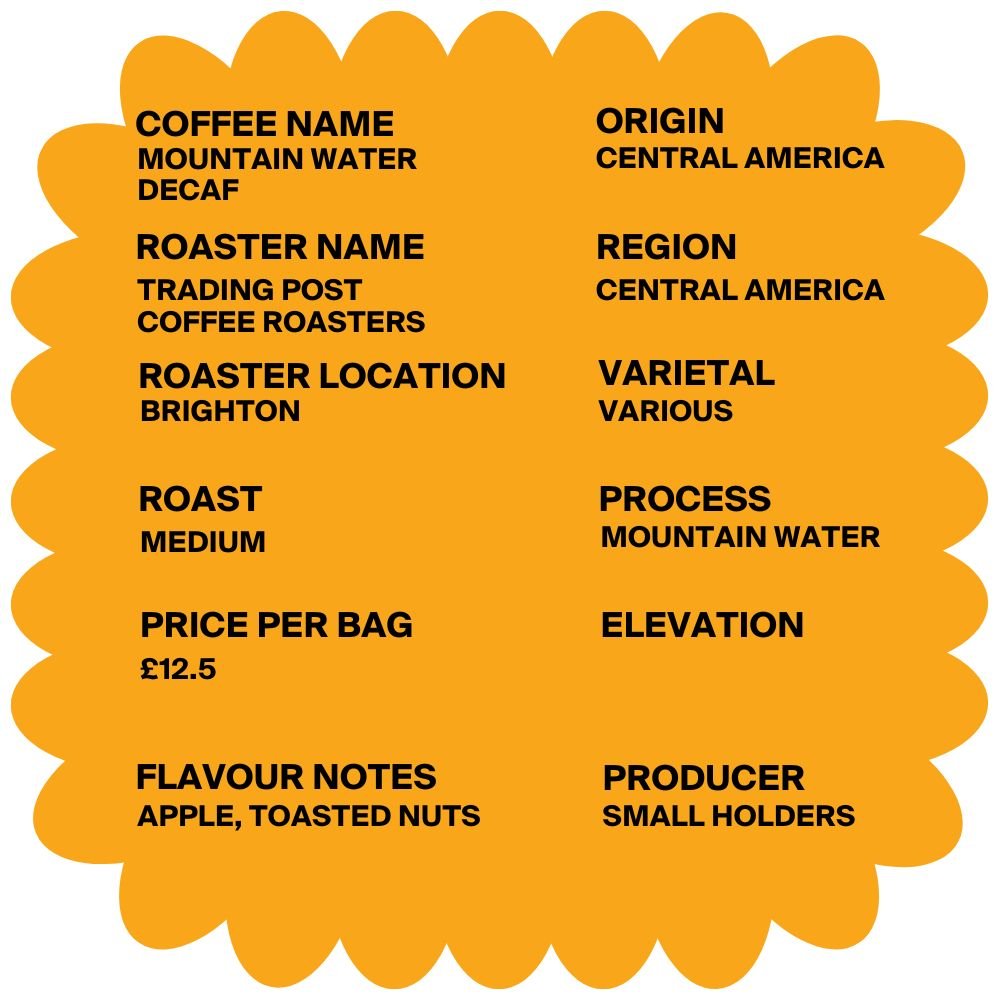
The Mountain Water decaf from Trading Post originated from Central America
The Mountain Water decaf coffee process is a natural and environmentally friendly method for removing caffeine from coffee beans. This process preserves the incredible flavour and aroma of decaf coffee beans. This results in a top-quality decaf that drinks and tastes like a regular artisan coffee.Unlike other decaf coffees that use chemicals or solvents, the Mountain Water decaf coffee process only uses water and carbon filters. This makes Mountain Water a completely chemical-free option for decaf lovers who are conscious about the environment.
The process involves soaking green coffee beans in hot water to extract the caffeine and other soluble compounds. The resulting solution, which contains both caffeine and flavour compounds, is then passed through a carbon filter that selectively removes caffeine while leaving the other flavour compounds intact. The filtered solution, which is now free of caffeine, is then used to soak a new batch of green coffee beans, which will absorb the flavour compounds but not the caffeine. This process is repeated until the desired level of decaffeination is achieved.
What To Expect