


Short answer: anaerobic coffee is coffee that has been fermented in a sealed container with the oxygen shut out, before it is dried. All coffee ferments a little on its way from cherry to bean, but sealing it up changes which yeasts and bacteria do the work, and that pushes the flavour somewhere new: jammy, tropical, winey and sometimes properly boozy. It is a processing step rather than a type of bean, so you will see it on bags as anaerobic natural, anaerobic washed or anaerobic honey.
I think whenever anyone tries an unusually processed coffee for the first time they’re not sure how to react. I remember cupping an experimental anaerobic coffee when I first started getting into coffee and couldn’t believe what I was tasting. It’s not for everyone and it’s not for everyday. But you can get some truly unique flavours out of an anaerobic coffee.
I’ve spent 13 years as a barista and roaster, wrote The Home Barista, and taste hundreds of coffees a year choosing what goes into Batch boxes. Below is how anaerobic coffee is made, what it tastes like, and four anaerobic coffees that have been through a Batch box, two of them decaf.
What is anaerobic coffee?
Every coffee bean starts life as the seed inside a cherry, wrapped in sweet, sticky fruit. To get the seed out and dried, producers either dry the whole cherry (natural), strip the fruit off and wash the seed (washed), or do something in between (honey). Whichever route they take, microbes get to work on the sugars in that fruit, and that is fermentation.
Can’t decide? Let us pick.
Two speciality coffees from different UK roasters in each delivery.
Pause or cancel whenever you like.
In a traditional process the fermentation happens in the open air, in tanks, bags or on drying beds. Anaerobic simply means without oxygen. The coffee goes into a sealed tank, barrel or bag fitted with a one way valve, so the carbon dioxide the microbes produce can push out but no fresh air gets in. Ozone Coffee put it neatly in their guide to anaerobic fermentation: it is a modifier on top of the usual processes, not a category of its own. That is why it always comes attached to another word on the bag.
How anaerobic coffee is made
- Pick ripe. The cherries are picked as ripe as possible, because the sugar in the fruit is the fuel for everything that follows.
- Seal it in. Whole cherries (for an anaerobic natural) or pulped seeds still coated in fruit (for anaerobic washed and honey) go into a sealed container. Most start with a little oxygen inside, which the native yeasts and bacteria use up before switching to oxygen free fermentation.
- Wait and watch. Fermentation runs from around 12 hours to more than a week. StoneX, a green coffee trader, give 36 hours as a minimum and point out that a 48 hour and a 120 hour version of the same coffee taste noticeably different. Producers track sugar levels, temperature and acidity, and some stop at a target pH in the high 3s.
- Dry it. The coffee comes out and is dried in the usual way for its process: as whole cherries, washed clean, or with some of the sticky fruit left on.
Temperature is the big variable. Cooler fermentations are slower and tend to taste cleaner; warmer ones are quicker and wilder. Get it wrong and the lot can taste of vinegar or sour milk, and a failed fermentation can cost a producer the whole batch. The importer Cafe Imports describe one Costa Rican mill running sealed stainless steel tanks for around 96 hours, stopping when the sugar content of the fruit has dropped to a set level.
Anaerobic natural vs anaerobic washed vs anaerobic honey
The word after anaerobic tells you what happened next, and it makes as much difference to the cup as the fermentation itself.
| Process | What happens | What it usually tastes like |
|---|---|---|
| Anaerobic natural | Whole cherries ferment sealed, then dry with the fruit still on | The most intense: jammy, tropical, winey, heavy body |
| Anaerobic honey | Fermented, then dried with some of the sticky fruit left on the seed | In between: sweet and fruity, with a bit more definition |
| Anaerobic washed | Usually pulped first, fermented sealed, then washed clean | The most restrained: cleaner and more structured, fruit as an accent |
If you are new to processing in general, our guide to washed vs natural coffee covers the two classic methods these build on.
Carbonic maceration: the wine trick
Carbonic maceration is a close cousin borrowed from winemaking, where it is used for Beaujolais. Whole, unbroken cherries go into a sealed tank and carbon dioxide is pumped in to push the oxygen out. The fermentation starts inside each cherry, driven by the fruit’s own enzymes, before the skins break down and the microbes take over. Expect sweet, aromatic coffees with a sparkling sort of acidity.
It went mainstream in coffee when Australian barista Saša Šestić used a carbonic maceration coffee to win the 2015 World Barista Championship in Seattle. A decade on, it is one of the processes Danelaw list among the coffees they roast.
What does anaerobic coffee taste like?
Louder than you expect. The sealed fermentation gives lactic acid bacteria a bigger role, and the alcohols, esters and acids they produce come through as:
- Tropical and stone fruit: mango, passion fruit, papaya, peach and plum, plus berries in the naturals.
- Booze: red wine, port, rum and fruit liqueur notes. Blackberry cordial on a bag is a good sign of where you are heading.
- Florals: jasmine, rose and honeysuckle, especially in lighter roasts.
- Texture: a round, soft acidity that people describe as creamy or yoghurty, and often a syrupy body.
Done badly, the same process tastes funky in the wrong way: rancid, sour milk or vinegar. A good anaerobic coffee tastes deliberate. A bad one tastes like it has been left in a warm car.
Four anaerobic coffees from Batch boxes
All four have been through a Batch box, and between them they cover the main versions you will see on a bag, including two decafs. Proof that the process is not just for showing off.
| Coffee | Roaster | Origin | Process | Flavour notes |
|---|---|---|---|---|
| El Matazano | Odd Kin | Honduras | Anaerobic natural | Plum, chocolate, blackberry cordial |
| Guatalón | Origin | El Salvador | Anaerobic black honey | Mandarin, apple, brown sugar |
| Crowd Pleaser Decaf | Revolution | Rwanda | Double fermented, anaerobic then washed | Chocolate, rye, caramel |
| Chambaku Decaf | Roasting Shed | Colombia | Anaerobic natural | Red berries, honey, raw cacao |
Prices below are per bag at the time each coffee featured in a Batch box. Speciality coffee is seasonal, so if one has sold out the roaster will usually have something similar.
1. El Matazano by Odd Kin: the full fat anaerobic natural
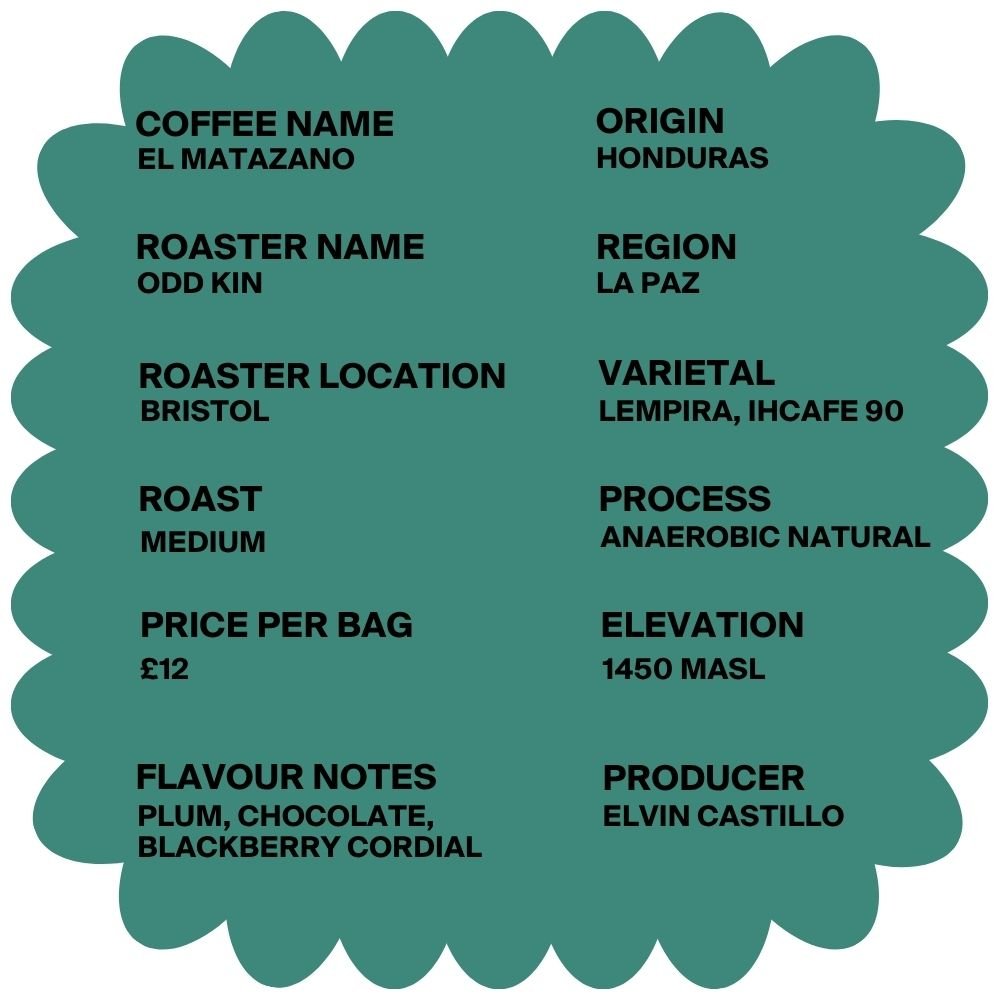

- Origin: La Paz, Honduras
- Process: Anaerobic natural
- Variety: Lempira, IHCAFE 90
- Elevation: 1,450 metres
- Flavour notes: Plum, chocolate, blackberry cordial
- Producer: Elvin Castillo
- Price when featured: £12
This is the textbook version: whole cherries sealed up to ferment before drying, which is where the blackberry cordial comes from. The roast keeps a chocolate base under it, so it is a gentle introduction rather than a fruit bomb. Elvin Castillo runs the five hectare farm his father founded and also leads a cupping lab in Honduras, so he knows exactly what he is aiming for. Odd Kin roast in Bristol, and this went out in box 166.
Read our Odd Kin Coffee Roasters review.
2. Guatalón by Origin: anaerobic black honey


- Origin: Juayua, El Salvador
- Process: Anaerobic black honey
- Variety: Catimor
- Elevation: 1,450 metres
- Flavour notes: Mandarin, apple, brown sugar
- Producer: Carlos Pola
- Price when featured: £13.20
Carlos Pola seals this coffee in airtight containers for three days, then dries it with a heavy coating of fruit left on, slowly enough that the sugars caramelise to black. He even layers coffee pulp under his homemade drying beds for the aroma, which nods to his love of barbecuing. The result sits between washed and natural: sweet and fruity, but with a clarity a full natural rarely has. Origin roast in Cornwall and have been buying from Carlos for years.
Read our Origin Coffee Roasters review.
3. Crowd Pleaser Decaf by Revolution: anaerobic, then washed

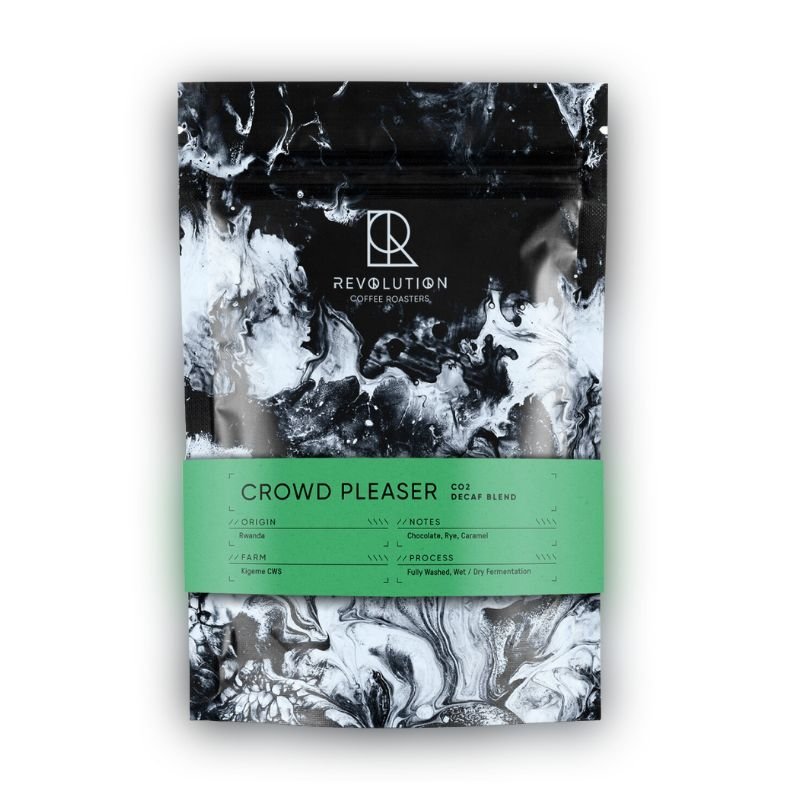
- Origin: Kigeme, Rwanda
- Process: Double fermented (dry, then anaerobic), washed, CO2 decaf
- Variety: Bourbon
- Elevation: 1,700 to 2,000 metres
- Flavour notes: Chocolate, rye, caramel
- Producer: Smallholders delivering to the Kigeme washing station
- Price when featured: £9
This one shows how subtle the process can be. The cherries get 12 to 18 hours of dry fermentation, then 24 to 36 hours of anaerobic fermentation in water, before they are pulped, fully washed and dried. Washing strips away most of the wild fruit, so what is left is depth: chocolate, caramel and a rye note that you would not expect from a decaf. It was then decaffeinated with carbon dioxide and water. Revolution roast in Rossendale, Lancashire.
Read our Revolution decaf review.
4. Chambaku Decaf by Roasting Shed: the decaf that tastes of something

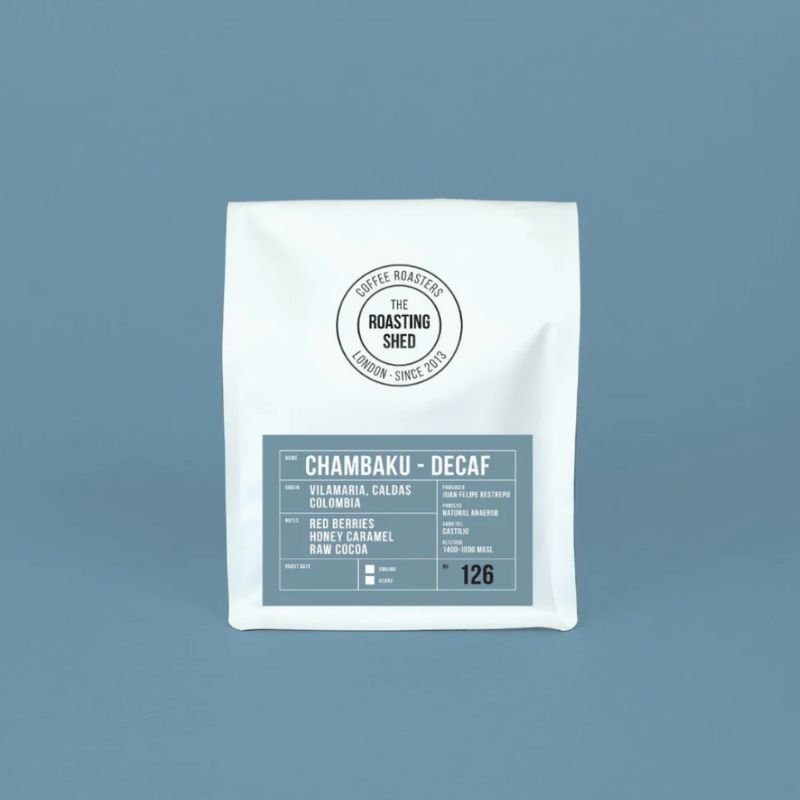
- Origin: Caldas, Colombia
- Process: Anaerobic natural, then decaffeinated
- Variety: Castillo
- Elevation: 1,400 to 1,800 metres
- Flavour notes: Red berries, honey, raw cacao
- Producer: Juan Felipe Restrepo
- Price when featured: £9
Decaffeination can flatten a coffee, so starting with a loud one makes sense. These Castillo beans were fermented anaerobically and dried as whole cherries before the caffeine was taken out, which leaves red berry fruit and a honeyed sweetness over raw cacao. Colombia is where a lot of the experimental processing happens, and this is a good example of putting it to practical use. The Roasting Shed started in a garden shed and now roast in London. More decafs like this are in our guide to the best decaf coffee beans.
Read our Roasting Shed decaf review.
Co fermented and infused coffee: where the arguments start
Co fermentation takes the anaerobic idea a step further: fruit, spices, yeast or other ingredients go into the tank with the coffee. Passion fruit, peach, cinnamon and grape are all common. Infused coffee usually means flavour added later, sometimes after roasting, and sometimes with flavourings that never saw a piece of fruit. The two terms are often used interchangeably and there are no formal definitions, which is part of the problem, as Perfect Daily Grind explain.
The rule makers are split. The World Barista Championship has allowed infused and co fermented coffees since late 2023, as long as the extra ingredients go in before the green coffee stage, while the Best of Panama competition turned them away in 2024. Critics point to allergy risks, ingredients that are not declared, and a feeling that a coffee tasting of strawberry because strawberries were in the tank is not quite fair. Sprudge have a good round up of both sides.
The simple test: plain anaerobic coffee is still just coffee, fermented differently. If a bag lists another ingredient in the process, it is co fermented, and you are drinking the producer’s recipe as much as the farm.
What is thermal shock coffee?
Thermal shock is another step you will see on experimental bags, usually alongside anaerobic. It was developed at Finca El Paraíso in Cauca, Colombia, and is credited to producers Diego Bermúdez and Wilton Benitez. After a long anaerobic fermentation, the coffee is heated in its own fermentation juices to between roughly 40°C and 50°C, then rinsed in cold water at around 10°C. The idea is that the heat opens the bean up to soak in more flavour, and the cold closes it again. Black & White Coffee Roasters break down each stage, and note that the science behind it still needs proper research.
Is anaerobic coffee worth it?
If you like fruit and want to taste something genuinely different, yes. The best anaerobic coffees are some of the most memorable cups you can buy. They also tend to cost more, because the tanks, the monitoring and the risk of losing a whole lot all have to be paid for, and that price can mean a better return for the producer.
There are fair criticisms too. Some in the industry worry that processing is starting to drown out the farm and the variety, so every coffee ends up tasting of the tank. And a heavy anaerobic natural can be a lot first thing in the morning. A washed or honey anaerobic is the gentler way in.
How to brew anaerobic coffee
Most anaerobic coffees are roasted light to medium to keep the fruit, so they shine as filter coffee. A pour over or AeroPress gives the cleanest view of what the fermentation has done: our pour over guide and AeroPress guide have the recipes, and our favourite coffees for pour over include more fruity picks. As espresso they can be wild and wonderful, though a little milk goes a long way to calming them down. Roast level makes a difference here as well, which our guide to light vs dark roast explains.
Frequently asked questions
What is anaerobic coffee?
Anaerobic coffee is coffee that was fermented in a sealed container without oxygen during processing, before it was dried. The sealed environment changes which microbes do the fermenting, which usually gives a fruitier, sweeter and often winey or boozy cup. It is a processing step, so it is paired with another process such as natural, washed or honey.
What is the difference between anaerobic and natural coffee?
A natural coffee is dried as a whole cherry in the open air. An anaerobic natural is fermented as whole cherries in a sealed, oxygen free tank first and then dried the same way. The anaerobic version is usually more intense, with jammy fruit and boozy notes.
What does anaerobic coffee taste like?
Usually fruity and intense: tropical fruit, plum, berries and red wine are common, often with a soft, creamy acidity and a syrupy body. Anaerobic washed coffees are cleaner and more restrained than anaerobic naturals.
Is anaerobic coffee the same as infused or co fermented coffee?
No. Anaerobic coffee is fermented on its own in a sealed tank. Co fermented coffee has other ingredients such as fruit, spices or yeast added to the fermentation, and infused coffee usually has flavour added later. Look for any extra ingredients listed in the process on the bag.
What is carbonic maceration in coffee?
Carbonic maceration is a winemaking technique where whole cherries are sealed in a tank and carbon dioxide is pumped in to push out the oxygen. Fermentation starts inside each cherry. It became well known in coffee after Saša Šestić used it to win the 2015 World Barista Championship.
Why is anaerobic coffee more expensive?
It needs sealed tanks, careful monitoring of temperature and acidity, and extra labour, and a fermentation that goes wrong can ruin a whole lot. Those costs and risks are reflected in the price, which can also mean a better return for the producer.
Can you get anaerobic decaf?
Yes. Some producers ferment the coffee anaerobically before it is decaffeinated, which helps it keep more flavour. Roasting Shed’s Chambaku and Revolution’s Crowd Pleaser are two anaerobic decafs that have featured in Batch boxes.
Taste it for yourself
Reading about fermentation only gets you so far. The quickest way to work out whether anaerobic coffee is your thing is to drink one next to a classic washed coffee and see which you reach for. Every coffee we have sent so far, including the four above, is in the box archive.
Fancy something a bit different in your cup? Every fortnight we send two speciality coffees from different independent UK roasters, whole bean or ground for your brewer, with tasting notes on every bag. Some are classic, some are wonderfully strange. Use BATCHBREW10 for 10% off your first box. Start your coffee subscription

