Just so you know. When you buy via the links on our blogs, we may earn an affiliate commission at no cost to you. Learn More
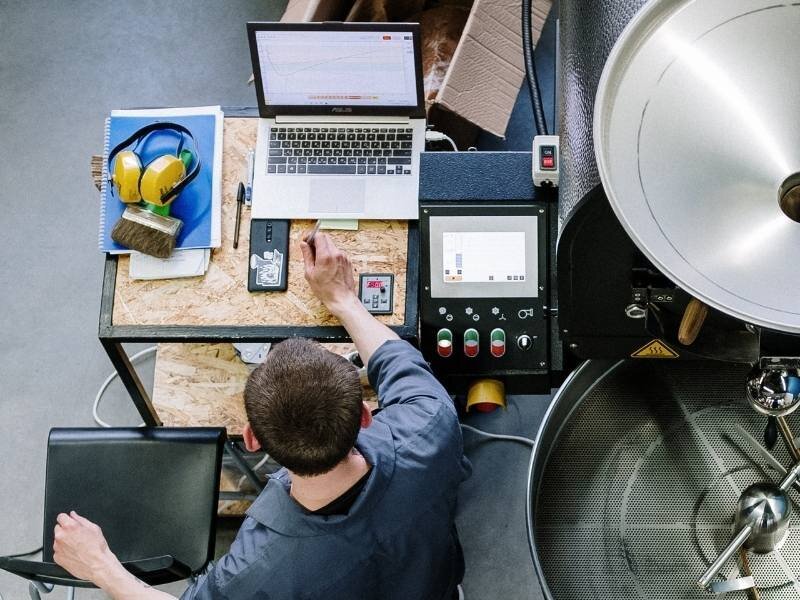
Coffee roasting today has become extremely technical.
With numerous temperature probes tracking the temperature of the coffee beans at each stage so the roaster knows to adjust certain variables.
Rightly so too, there has already been a huge amount of research and expertise for the beans to get this far, before they are even dropped into a coffee roaster.
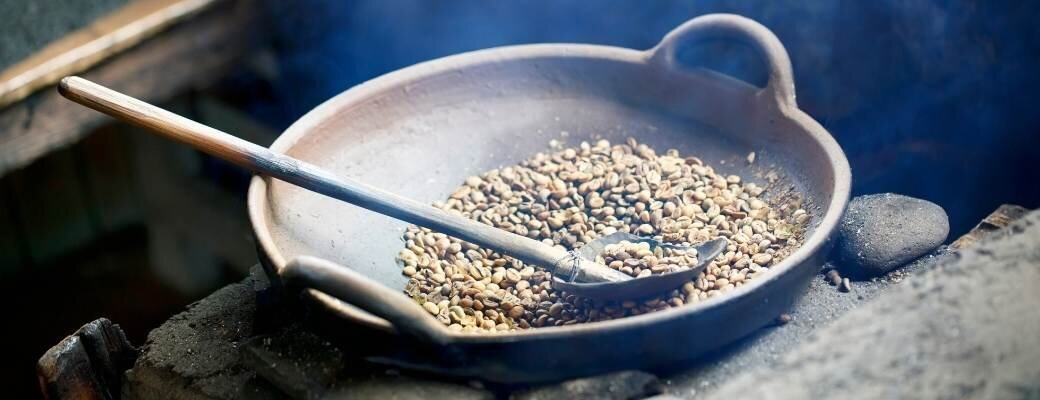
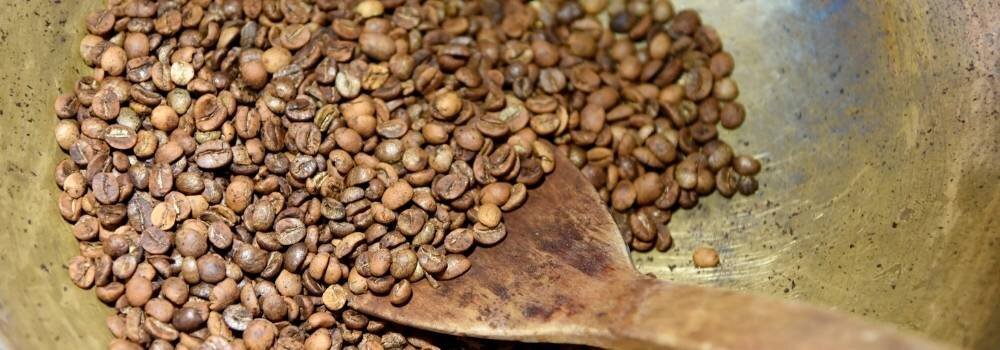
Although traditional drum or convection roasters will have roasted the majority of the coffee that is consumed throughout the world there are still a few places that roast coffee the ‘even more traditional’ way, in a large skillet/pan over a flame.
It is seen often in African countries, particularly Ethiopia however I came across it for the first time when visiting a coffee farm in Cuba.
After a tour of the Finca (farm), we gathered around a fire to watch the farmer stirring raw coffee around a huge steel pan over a flame.
The coffee took minutes to roast as the temperature was so hot and basically burnt the beans.
The coffee was later ground in a huge manual grinder that was attached to the end of a bench.
The coffee did lack in any notes other than roasty flavours, which were muted by adding a customary spoon full of Panella (raw sugar).
Although I would have never wished this method of roasting on a high-quality coffee, it certainly was a magical thing to watch and a great way to begin learning the processes and sensory cues of coffee roasting.
Roasting coffee beans at home in a pan, oven, or popcorn maker is something that I would recommend everyone who wants to learn about coffee try once.
It is definitely not a method that I would advise anybody to use as their only method of roasting coffee but it’s a great way to see the coffee change colour and experience the multitude of aromas that permeate from the pan.
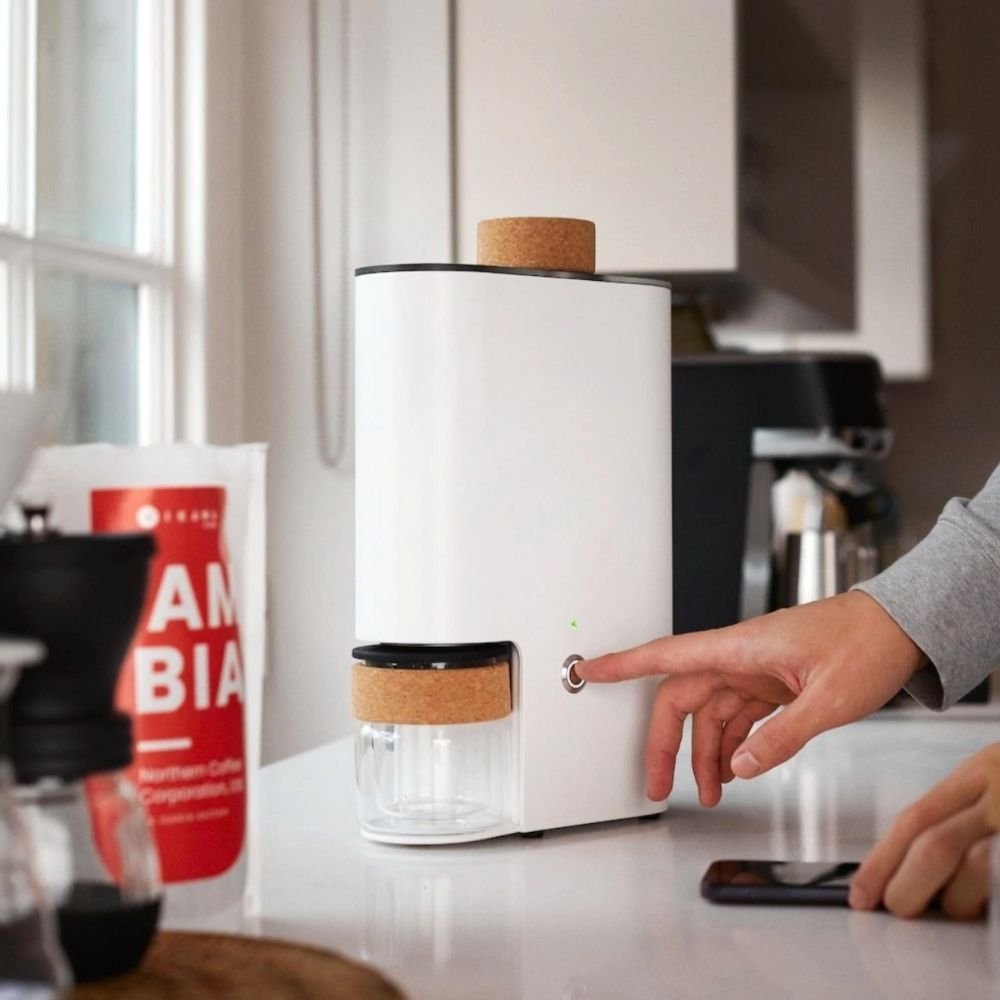
When you have graduated from one of the below methods it will be time to invest in your ownhome coffee roaster.
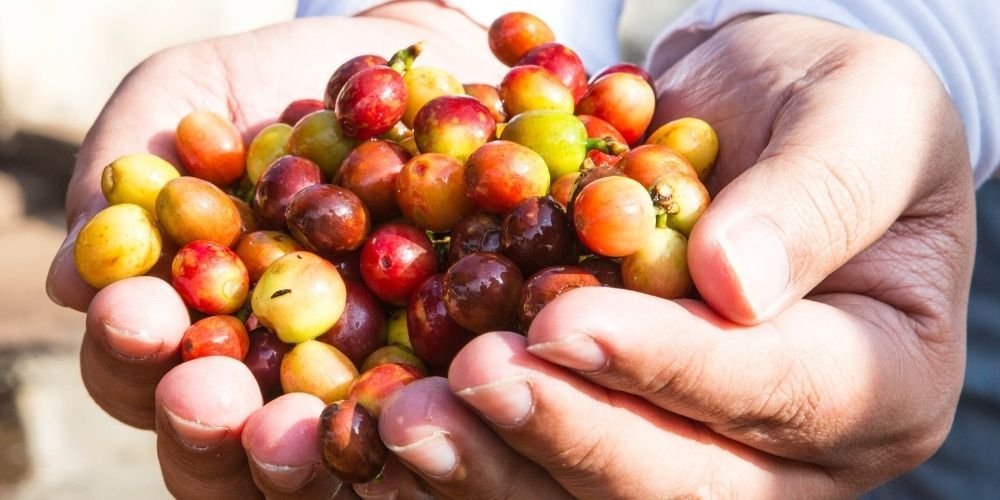
First of all, going all the way back to the origin, coffee begins as a fruit that is picked from a tree.
The red (sometimes yellow) coffee cherry is removed leaving the seed (the bean) which is then processed further, removing a slimy layer called the mucilage and then dried in various ways.
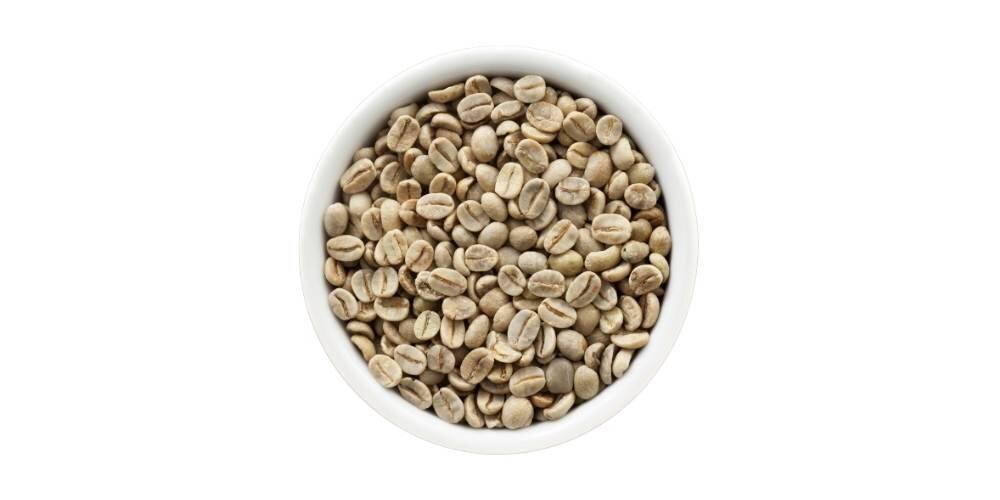
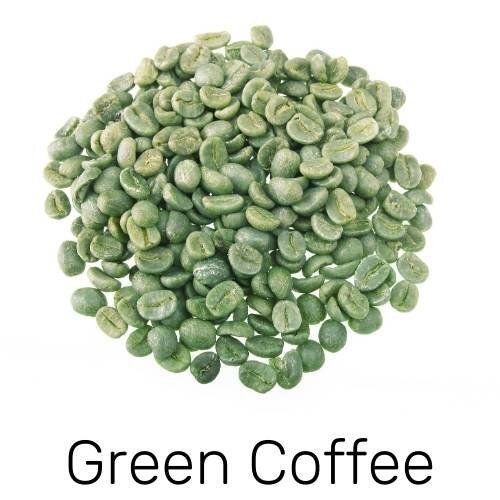
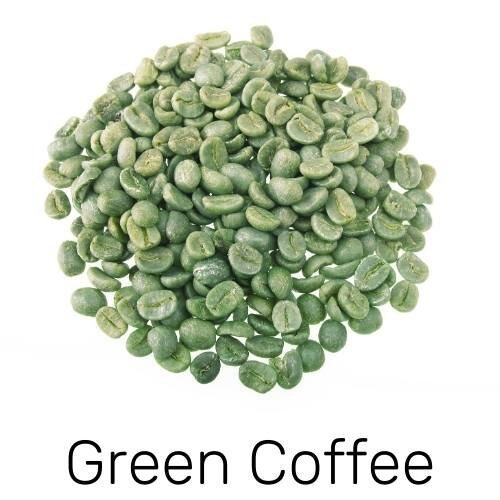
The outcome is green/raw coffee that is exported from the source and arriving in (usually 60kg) coffee sacks throughout the coffee importing world.
Green coffee like many other seeds has a fairly high moisture content, this results in a fairly tough composition making them hard to grind.
If you were to brew green coffee though the taste will be plant-like and grassy – all together pretty unpleasant.
The tale goes that an Ethiopian goat herder discovering coffee beans when his goats were dancing later sharing them with a monk who disapproved and threw the beans onto a fire when delicious smells permeated from the flames.
Today the process is a little more delicate and we roast coffee to dry the beans and then provoke certain chemical reactions that trigger desirable outcomes in taste, here are the stages of coffee roasting;
Stages Of Coffee Roasting
Raw Coffee.
Green coffee is first loaded or emptied into the roaster.
At this point, the coffee green coffee is at around 10% moisture level.
Drying.
The roaster is preheated and coffee immediately starts to dry and lose moisture as the coffee is rotated to give an even roast.
The coffee at this point will start to gradually change colour and appear a lighter shade with grassy, vegetal aromas.
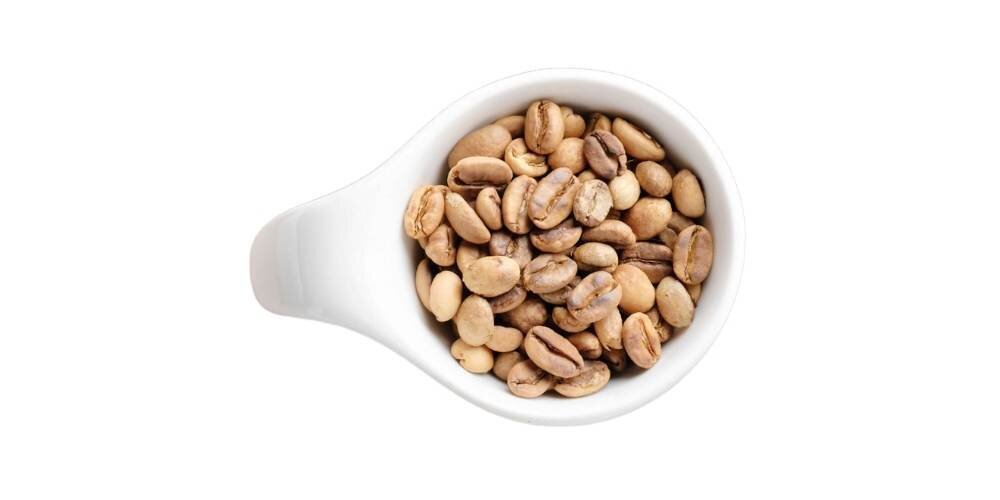
Yellowing/Maillard.
Coffee begins to change colour into various shades of yellow.
The Maillard reaction begins when the coffee beans hit around 150℃ and the sugars react with amino acids to commence coffee browning.
You may start to smell aromas of the roast as the coffee beans start to swell and shed the thin papery outer layer called chaff.
Browning.
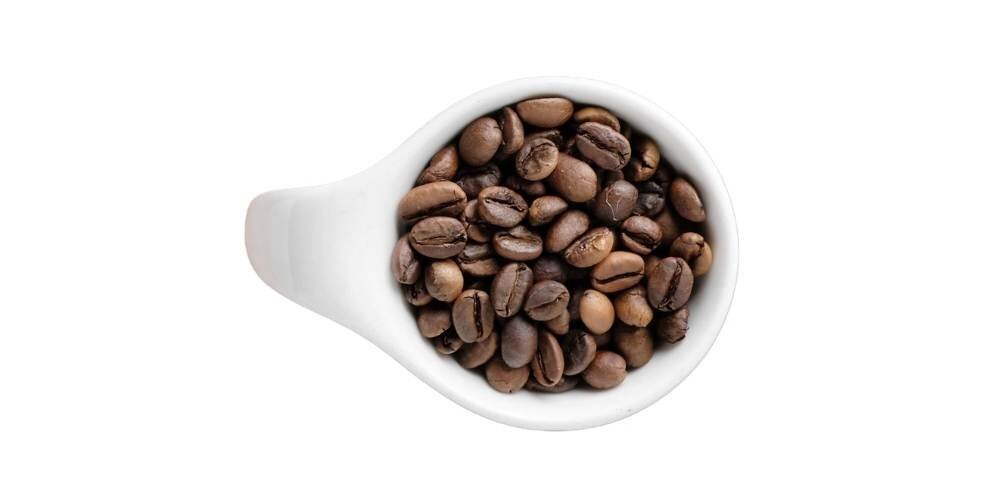
As the bean temperature rises the colour will deepen into light shades of brown.
Here the aroma starts to become pleasant and resembles the smell of toast as the sugars begin to caramelise.
First Crack.
The most significant part of a roast and probably the most enjoyable.
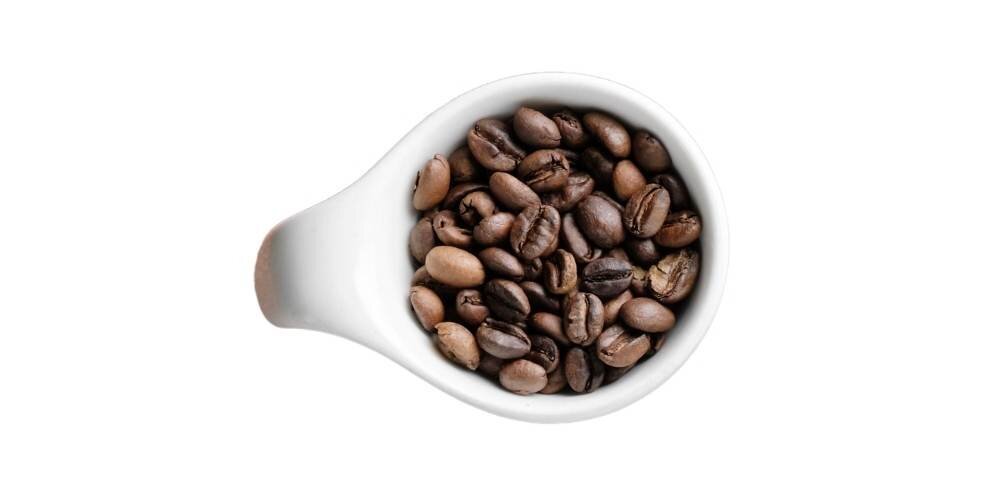
As the beans approach 200℃ the build-up of gasses burst out of the coffee bean creating an audible pop or crack.
This will last for a few seconds and is a similar sound to making popcorn.
The aroma still resembles the pleasant smell of toast.
At this point, the coffee is at a moisture level that will be easy enough to grind and brew.
Many light roasted coffees are dropped at this stage, extenuating delicate flavours in the coffee particularly acidic notes.
Development.
For the next minute or so, the roaster has to really pay attention.
This is where coffee is expertly crafted to highlight various flavour notes and attributes.
All the variables like airflow, drum speed and temperature have to be carefully regulated while temperature gauges inside the drum are fluctuating because of gas escaping from the bean.
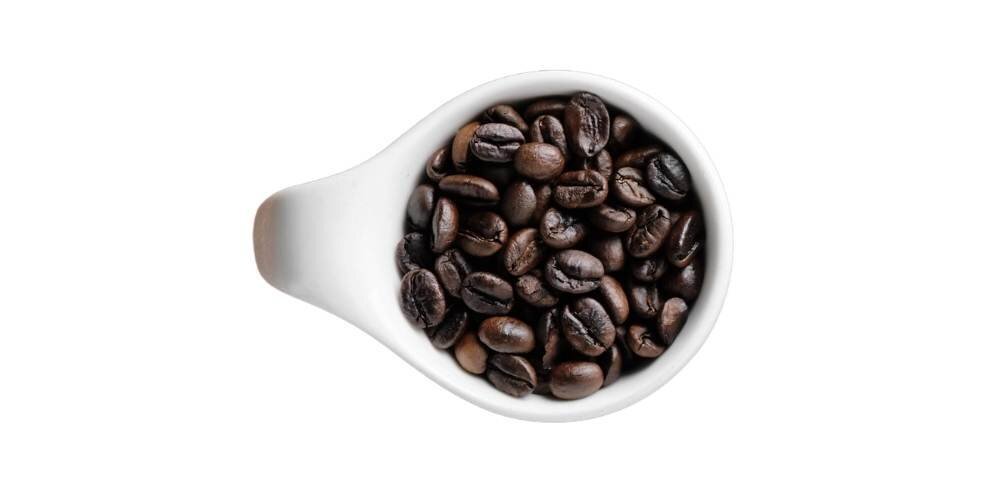
Traditionally the sample spoon is used to monitor the colour and the smell of the coffee beans, while modern roasters are sometimes programmed to roast a specific profile.
Second Crack.
A point of the roast that very few speciality coffee roasters will ever reach.
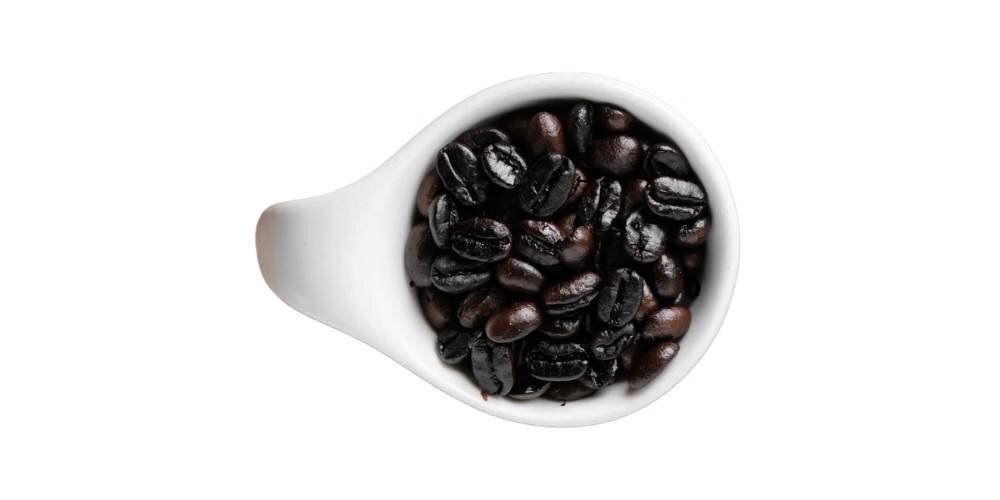
Here, oils move from inside the bean through to the surface, the sound is attributed to the structure of the coffee bean changing.
Coffee that has reached the second crack will be dark and oily.
Aromas start to become more burnt and roasty.
Cooling.
You will see the cooling tray of commercial coffee roasters on any of their Instagram feeds.
It is normally a large circular tray with rotating arms that mix the coffee.
Air is drawn through the beans cooling them down.
This is a very important part, as like your dippy eggs in the morning if you don’t cool them they carry on cooking.
DIY Coffee Roasting Methods?
To give you an idea of what the temperatures are like in a coffee roaster most roasts will start at around when the machine has been charged to around 200℃ (depending on the size of the roaster and batch) and end around 210℃ in between is all about regulating the amount of heat, drum speed and airflow.
The type of green beans, ambient temperature and roaster temperature all contribute to the variables.
Roasting Coffee Beans in a Pan
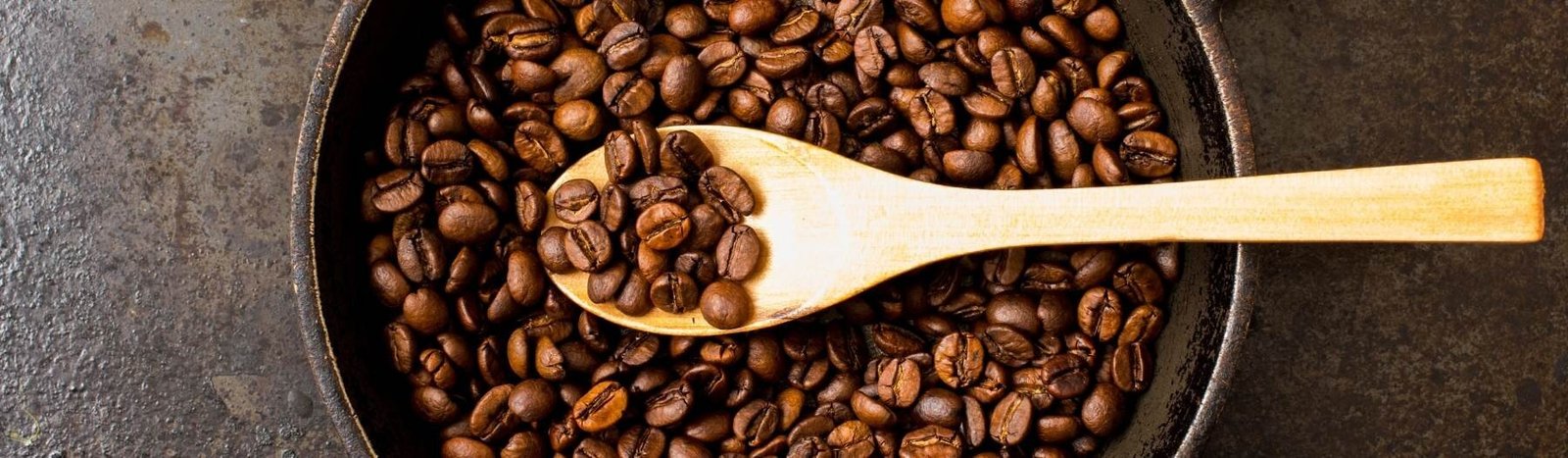
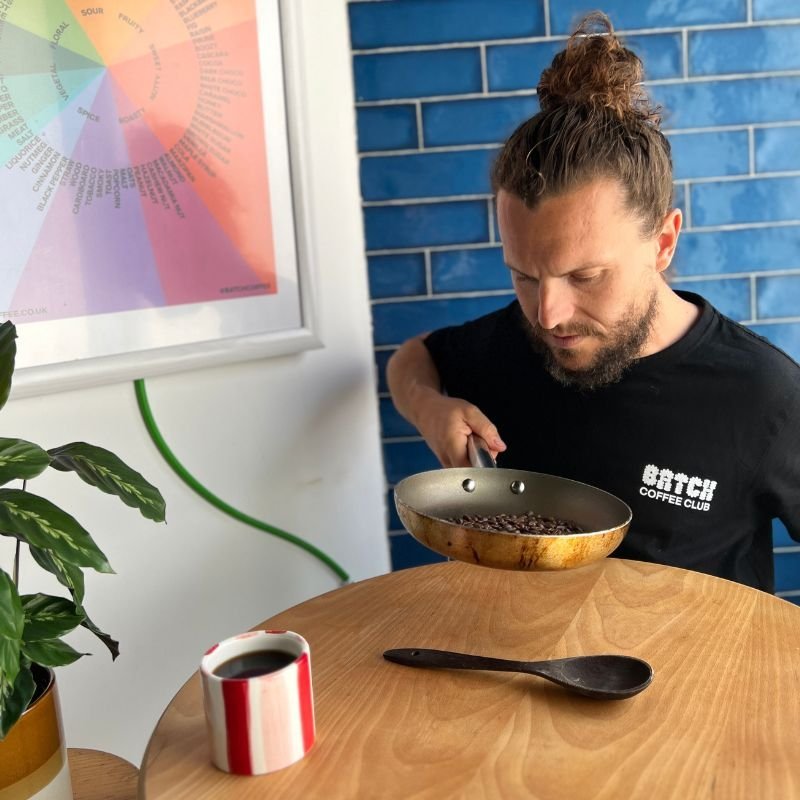
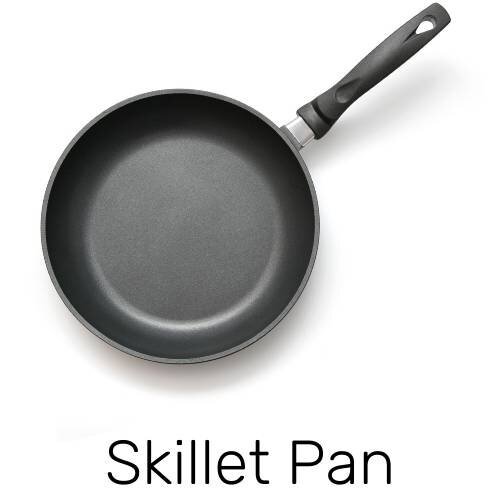
The first time I tried to roast coffee at home I used a skillet pan.
It’s easy to do, extremely hard to master and even when mastered the end results are mediocre.
This all said I would recommend this method first and foremost if you would like to roast your own coffee because you are right there with the green beans manually tending to them and observing each stage.
What you’ll need
Method
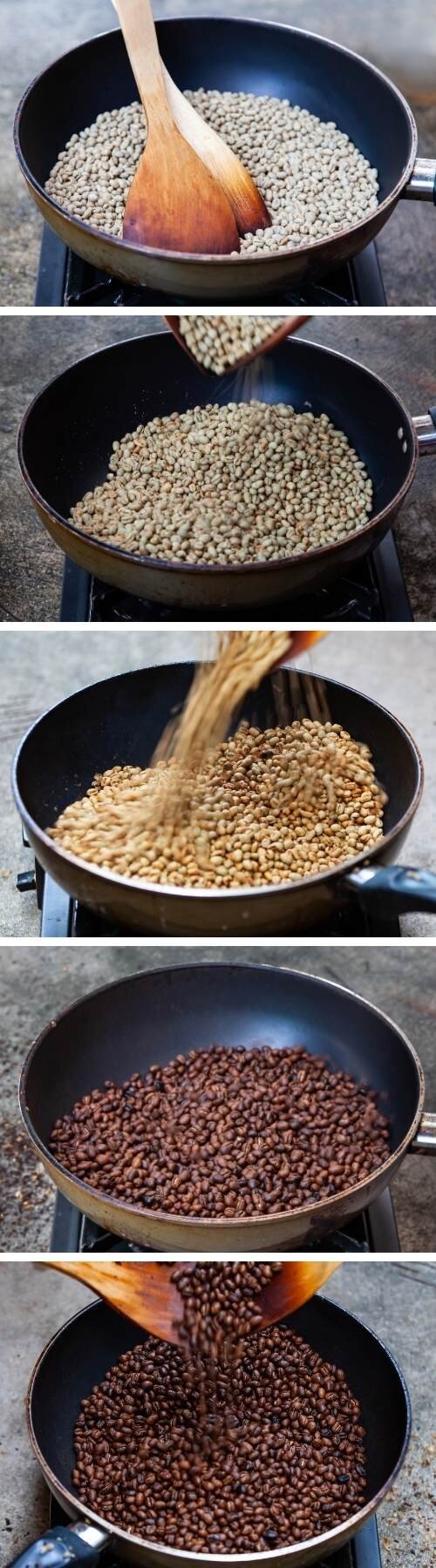
Preheat the pan on the hob. You’re aiming for something similar to the drum roasters charge temp of 200℃ however as long as the skillet is heated through on a medium/high heat you should be ok.
This may get a little smokey so whack the extractor fan up and open a few doors.
Pour your green coffee into your pan making sure you only have roughly 1 layer of coffee beans.
With a whisk start to continuously stir.
It is important that you keep stirring the coffee beans as otherwise, the ones on the bottom will burn.
Enjoy the sensory experience of roasting your own coffee beans and take note of the stages highlighted above.
You should be aiming for the first crack at around 7 minutes but that depends on the size of your pan.
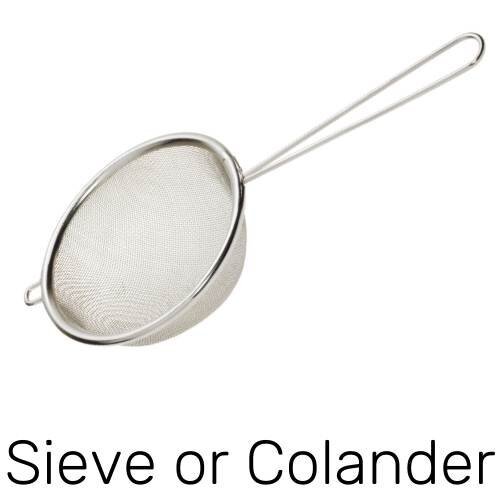
When you have a colour that resembles the coffee you are used to drinking pour the beans into a sieve or colander.
Now pour the beans from the colander into the sieve continually, to cool the beans and lose the chaff.
Typically roasts should be rested for at least 4 days before brewing, however, why not try the coffee after it has cooled to experience the most freshly roasted coffee you have ever tasted.
You shouldn’t have to adjust the temperature of the hob once you have started to roast, however, if your roast time is over 11 minutes then next time make the pan hotter.
Likewise, if the roast lasts 6 minutes, try a less intense heat.
Try to keep everything consistent and change one variable at a time.
This is very similar to brewing coffee, with so many variables, it is so easy to brew and roast inconsistent coffee.
You will achieve the perfect coffee quicker by keeping everything the same and altering one variable.
Roasting Coffee Beans in an Oven
I would recommend oven roasting coffee beans at home if you for some reason don’t want to roast the coffee in a pan or you’ve already had a go at that with little luck and now you’re after an alternative.
It’s very hard not to just bake the beans in a domestic oven as they struggle to reach the insanity of a commercial roaster (which is essentially a big revolving oven).
It’s also hard to rotate the beans with this method as opening the oven to stir the tray will drop the temperature.
You also won’t have the sensory cues that pan-roasting offers.
That said, you can still roast coffee in an oven and it is worth doing on a small scale to see how you fare.
What you’ll need
Method
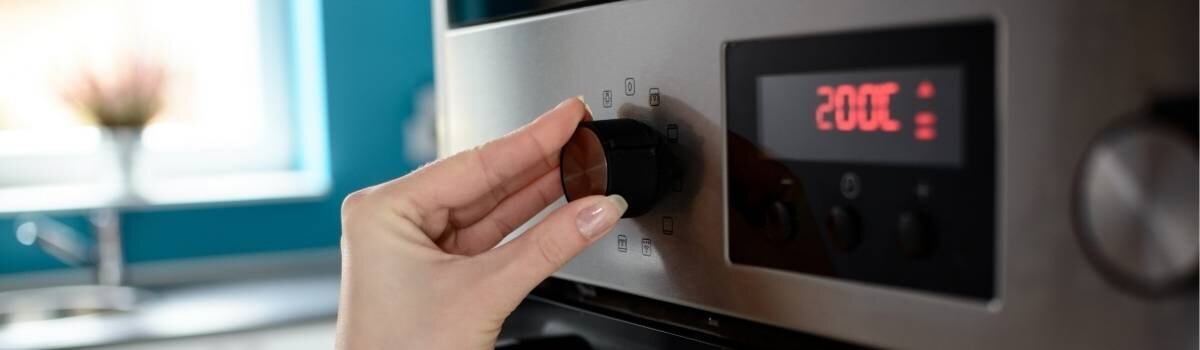
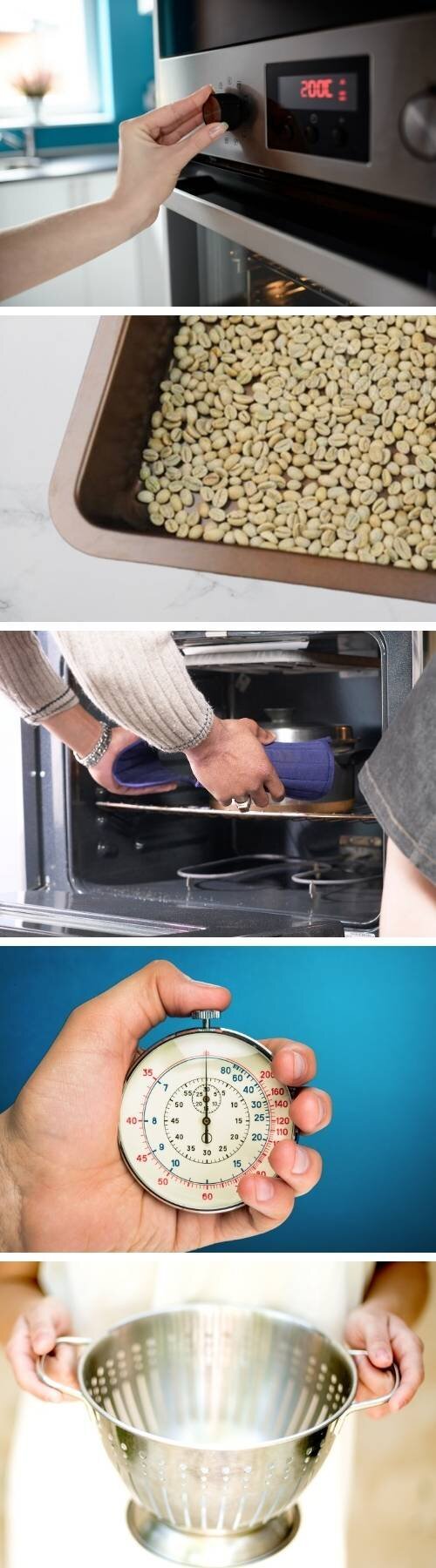
Preheat the oven to around 250℃ and make sure you’ve given the outside of the oven time to hold some heat and stabilise at that temperature.
Open all the windows.
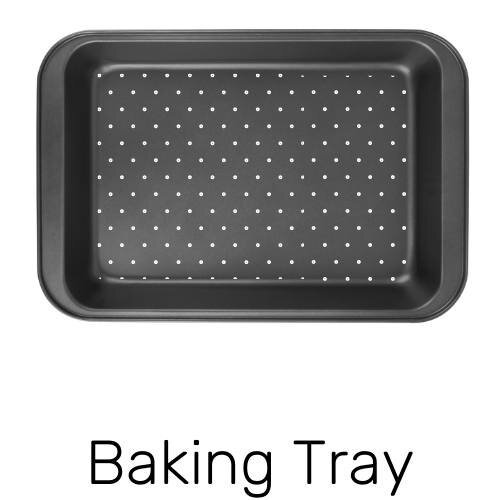
Spread the beans on a baking tray.
Preferably on a tray with tiny holes on the bottom or a perforated tray so the beans will roast evenly.
Place the tray inside the oven and close the door as quickly as possible.
If your oven has a window then you will be able to pull the beans out when they reach the desired colour.
If you don’t have a window start your timer.
Observe the beans and if they look as though they are roasting unevenly open the oven and stir.
Try to avoid doing this more than once though as the drop in temperature will bake the beans and create a flat-tasting coffee.
If you’re using a timer pull the coffee out at around 12 minutes.
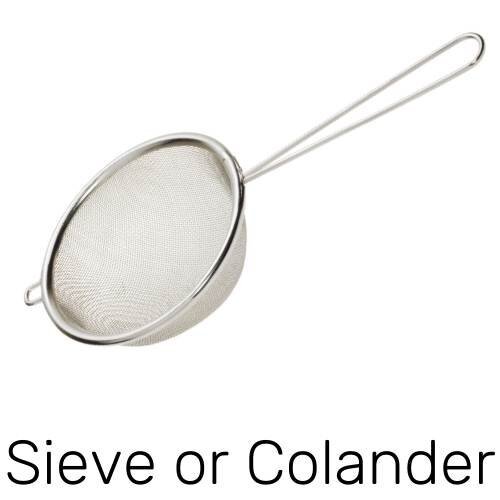
Similar to the skillet pan coffee roasting above, pour the coffee into a sieve and continuously pour back and forth between the sieve and a colander.
Rest the coffee or try some after it has cooled.
Roasting Coffee Beans in a Popcorn Machine
Popcorn poppers come in various different sizes, shapes and functionality.
I never really came across popcorn poppers until I was an adult, we always used to be a ‘popcorn-in-a-bag’ sort of family growing up.
Alas, they make pretty good coffee roasters and you can pick one up pretty cheap online today it’s definitely worth a go, especially if you’ll use it for making popcorn too (it tastes better than microwave any day).
What you’ll need
Method
Preheat the popcorn popper, whether it’s electric or stovetop.
Place green beans into the popcorn popper, the amount will vary depending on the particular model.
It’s always better to go less than more initially as too much coffee will result in inconsistent under roasted coffee.
Stir the coffee (sometimes this will involve turning a handle on a stovetop popper while some are automatic)
Listen, watch and smell for the various stages of roasting.
When the coffee has reached your preferred roast level empty the beans into a sieve and pass between the sieve and colander, cooling the beans.
Is it worth home roasting coffee?
It completely depends on what you think you will get out of it.
Like with any skill or craft there is a lengthy process before you can reach an outcome close to what you purchase from a shop.
However, if you are willing to invest time and find enjoyment in making something for yourself then roasting coffee at home is worth it.
Do you dry coffee beans before roasting?
No, coffee beans are not typically dried before roasting.
In fact, coffee beans are first dried after they are harvested to reduce their moisture content and stabilize their quality during storage and transportation.
This process is called “coffee bean drying” and typically involves spreading the beans out in thin layers and allowing them to dry naturally in the sun or with the aid of mechanical dryers.
Quick Enquiry
We’ll get back to you right away.
Tom’s Secret Code Club
I have negotiated discount codes with some of our partners. However they cannot be published online.
Share your details and I’ll send you the password to unlock the secret code page.
COFFEEQUIZ25 will give you 25% off your first box 😊
Discover the UK’s finest speciality coffees, curated by us – the coffee professionals. Each delivery is completely different so you sample two new coffees, roasters and flavours in every box.
Ethically sourced, world-class coffee in compostable packaging – it doesn’t get better than this!
3 BOX PACKAGE – £19.50 per box
6 BOX PACKAGE – £17.99 per box – (Most Popular)
12 BOX PACKAGE – £17.50 per box – (Best Value)
Each coffee subscription box contains 2 x 200g bags of world-class speciality coffee, carefully curated to showcase exceptional quality and flavour profiles.
Our coffee club features 2 different independent coffee roasters in each box.
Your first coffee subscription delivery includes a free flavour wheel and brew guide, providing essential tools to enhance your coffee club journey.
All coffee featured in our coffee subscription is ethically sourced and Fairtrade certified, supporting sustainable farming practices and fair compensation for growers worldwide.
Our coffee club uses completely compostable packaging, making your coffee club experience environmentally responsible whilst protecting the freshness and quality of your speciality coffee beans.
We Dispatch Every 2 Weeks. The next dispatch is highlighted in the purple announcement bar above.
If you can’t wait that long drop us an email via our contact form below and we’ll send you some coffee asap. You can find all past and future dispatch dates here
Which postal companies do you use for shipping? We use Royal Mail and occasionally other courier services such as DPD, Evri or UPS.
How much coffee is in a BATCH box? Each Batch box contains 2 bags of speciality coffee.
How much coffee is in each bag? Each bag of coffee contains 200g of coffee. You will receive 2 bags with each box so you can taste and compare between the two.
How is the coffee packaged? We are plastic-free. Our bags and boxes are fully made out of organic material and re both fully compostable.Learn more about our Coffee Packaging.
Is your coffee organic fair trade? All of the coffee that we use in our subscription boxes is fair trade (as every product should be). While some of the coffee that we use may not always be “certified” organic, we have seen first-hand many farms are in fact organic but cannot afford to pay for the certification.
Do you provide information about the farms and producers Yes! Each coffee subscription box includes detailed information about the coffee farms, the producers, and the regions where your coffee was grown. We believe in transparency and want you to know the story behind every cup you brew.
What happens if I don’t like one of the coffees in my box? We understand that taste preferences vary! If you’re not satisfied with a particular coffee, please get in touch with our customer service team via our contact page.
COFFEEQUIZ25 will give you 25% off your first box 😊
Discover the UK’s finest speciality decaf coffees, curated by us – the coffee professionals. Each delivery is completely different so you sample two new decaf coffees, roasters and flavours in every box.
Ethically sourced, world-class decaf in compostable packaging – it doesn’t get better than this!
Each coffee subscription box contains 2 x 200g bags of world-class speciality coffee, carefully curated to showcase exceptional quality and flavour profiles.
Our coffee club features 2 different independent coffee roasters in each box.
Your first coffee subscription delivery includes a free flavour wheel and brew guide, providing essential tools to enhance your coffee club journey.
All coffee featured in our coffee subscription is ethically sourced and Fairtrade certified, supporting sustainable farming practices and fair compensation for growers worldwide.
Our coffee club uses completely compostable packaging, making your coffee club experience environmentally responsible whilst protecting the freshness and quality of your speciality coffee beans.
We Dispatch Every 2 Weeks. The next dispatch is highlighted in the purple announcement bar above.
If you can’t wait that long drop us an email via our contact form below and we’ll send you some coffee asap. You can find all past and future dispatch dates here
Which postal companies do you use for shipping? We use Royal Mail and occasionally other courier services such as DPD, Evri or UPS.
How much coffee is in a BATCH box? Each Batch box contains 2 bags of speciality coffee.
How much coffee is in each bag? Each bag of coffee contains 200g of coffee. You will receive 2 bags with each box so you can taste and compare between the two.
How is the coffee packaged? We are plastic-free. Our bags and boxes are fully made out of organic material and re both fully compostable.Learn more about our Coffee Packaging.
Is your coffee organic fair trade? All of the coffee that we use in our subscription boxes is fair trade (as every product should be). While some of the coffee that we use may not always be “certified” organic, we have seen first-hand many farms are in fact organic but cannot afford to pay for the certification.
Do you provide information about the farms and producers Yes! Each coffee subscription box includes detailed information about the coffee farms, the producers, and the regions where your coffee was grown. We believe in transparency and want you to know the story behind every cup you brew.
What happens if I don’t like one of the coffees in my box? We understand that taste preferences vary! If you’re not satisfied with a particular coffee, please get in touch with our customer service team via our contact page.
COFFEEQUIZ25 will give you 25% off your first box 😊
Discover the UK’s finest speciality coffees, curated by us – the coffee professionals. Each delivery is completely different so you sample two new coffees, roasters and flavours in every box.
Ethically sourced, world-class coffee in compostable packaging – it doesn’t get better than this!
3 BOX PACKAGE – £19.50 per box
6 BOX PACKAGE – £17.99 per box – (Most Popular)
12 BOX PACKAGE – £17.50 per box – (Best Value)
Each coffee subscription box contains 2 x 200g bags of world-class speciality coffee, carefully curated to showcase exceptional quality and flavour profiles.
Our coffee club features 2 different independent coffee roasters in each box.
Your first coffee subscription delivery includes a free flavour wheel and brew guide, providing essential tools to enhance your coffee club journey.
All coffee featured in our coffee subscription is ethically sourced and Fairtrade certified, supporting sustainable farming practices and fair compensation for growers worldwide.
Our coffee club uses completely compostable packaging, making your coffee club experience environmentally responsible whilst protecting the freshness and quality of your speciality coffee beans.
We Dispatch Every 2 Weeks. The next dispatch is highlighted in the purple announcement bar above.
If you can’t wait that long drop us an email via our contact form below and we’ll send you some coffee asap. You can find all past and future dispatch dates here
Which postal companies do you use for shipping? We use Royal Mail and occasionally other courier services such as DPD, Evri or UPS.
How much coffee is in a BATCH box? Each Batch box contains 2 bags of speciality coffee.
How much coffee is in each bag? Each bag of coffee contains 200g of coffee. You will receive 2 bags with each box so you can taste and compare between the two.
How is the coffee packaged? We are plastic-free. Our bags and boxes are fully made out of organic material and re both fully compostable.Learn more about our Coffee Packaging.
Is your coffee organic fair trade? All of the coffee that we use in our subscription boxes is fair trade (as every product should be). While some of the coffee that we use may not always be “certified” organic, we have seen first-hand many farms are in fact organic but cannot afford to pay for the certification.
Do you provide information about the farms and producers Yes! Each coffee subscription box includes detailed information about the coffee farms, the producers, and the regions where your coffee was grown. We believe in transparency and want you to know the story behind every cup you brew.
What happens if I don’t like one of the coffees in my box? We understand that taste preferences vary! If you’re not satisfied with a particular coffee, please get in touch with our customer service team via our contact page.
The Batch seasonal espresso blend is a great choice for home baristas seeking consistently and expertly roasted coffee beans.
These beans produce a well-balanced, full-bodied espresso that shines whether enjoyed black as an espresso or Americano, or when cutting through milk-based drinks with distinctive character.
Each coffee subscription box contains 2 x 200g bags of world-class speciality coffee, carefully curated to showcase exceptional quality and flavour profiles.
Our coffee club features 2 different independent coffee roasters in each box.
Your first coffee subscription delivery includes a free flavour wheel and brew guide, providing essential tools to enhance your coffee club journey.
All coffee featured in our coffee subscription is ethically sourced and Fairtrade certified, supporting sustainable farming practices and fair compensation for growers worldwide.
Our coffee club uses completely compostable packaging, making your coffee club experience environmentally responsible whilst protecting the freshness and quality of your speciality coffee beans.
We Dispatch Every 2 Weeks. The next dispatch is highlighted in the purple announcement bar above.
If you can’t wait that long drop us an email via our contact form below and we’ll send you some coffee asap. You can find all past and future dispatch dates here
Which postal companies do you use for shipping? We use Royal Mail and occasionally other courier services such as DPD, Evri or UPS.
How much coffee is in a BATCH box? Each Batch box contains 2 bags of speciality coffee.
How much coffee is in each bag? Each bag of coffee contains 200g of coffee. You will receive 2 bags with each box so you can taste and compare between the two.
How is the coffee packaged? We are plastic-free. Our bags and boxes are fully made out of organic material and re both fully compostable.Learn more about our Coffee Packaging.
Is your coffee organic fair trade? All of the coffee that we use in our subscription boxes is fair trade (as every product should be). While some of the coffee that we use may not always be “certified” organic, we have seen first-hand many farms are in fact organic but cannot afford to pay for the certification.
Do you provide information about the farms and producers Yes! Each coffee subscription box includes detailed information about the coffee farms, the producers, and the regions where your coffee was grown. We believe in transparency and want you to know the story behind every cup you brew.
What happens if I don’t like one of the coffees in my box? We understand that taste preferences vary! If you’re not satisfied with a particular coffee, please get in touch with our customer service team via our contact page.
Manage Consent
To provide the best experiences, we use technologies like cookies to store and/or access device information.
Functional
Always active
The technical storage or access is strictly necessary for the legitimate purpose of enabling the use of a specific service explicitly requested by the subscriber or user, or for the sole purpose of carrying out the transmission of a communication over an electronic communications network.
Preferences
The technical storage or access is necessary for the legitimate purpose of storing preferences that are not requested by the subscriber or user.
Statistics
The technical storage or access that is used exclusively for statistical purposes.The technical storage or access that is used exclusively for anonymous statistical purposes. Without a subpoena, voluntary compliance on the part of your Internet Service Provider, or additional records from a third party, information stored or retrieved for this purpose alone cannot usually be used to identify you.
Marketing
The technical storage or access is required to create user profiles to send advertising, or to track the user on a website or across several websites for similar marketing purposes.