

Short answer: the best coffee beans for a latte or flat white are medium roasts with chocolate, nut and caramel notes and a bit of body, the sort you find from Brazil, Honduras, Peru and Uganda. Milk flattens delicate, high acidity coffees, so the beans that taste thrilling black are often the ones that go missing in a latte.
I have made thousands of flat whites, caps and lattes working as a barista and used lots of different coffees while doing so. You’d could be tricked into thinking that the magic is in the milk when you’re served a latte with a perfectly symmetrical tulip sitting on top. However the difference between a good and a great latte or flat white lies in the beans.
I’ve spent 13 years as a barista and roaster, wrote The Home Barista, and taste hundreds of coffees a year choosing what goes into Batch boxes. Every coffee below has been through a Batch box, so these are coffees we’ve actually tasted, not a list copied from a supermarket shelf.

Quick picks: the best coffee beans for milk drinks
| Coffee | Roaster | Origin | Flavour notes | Best for |
|---|---|---|---|---|
| Rwenzori | Routes Coffee Roasters | Uganda | Dark chocolate, plum, brown sugar, pecan | Best overall for milk |
| Peaberry | Lost Sheep Coffee Roasters | Brazil | Berries, milk chocolate, walnut | Best for lattes |
| Copán | Lomond Coffee Roasters | Honduras | Plum, green apple, cocoa | Best for flat whites |
| Tarrazu | Coffee Factory | Costa Rica | Stewed plum, cacao nibs | Best for cappuccinos |
| Caranavi | Olfactory Coffee Roasters | Bolivia | Hazelnut, red apple, cherry | Best with oat milk |
| Songbird | Kin Coffee Roasters | Uganda | Strawberry, caramel, milk chocolate | Best value and best fruity latte |
| Chilchos Valley | Missing Bean Coffee Roasters | Peru | Blackberry, sultana, dark chocolate | Best for bean to cup machines |
Prices further down are per bag at the time each coffee featured in a Batch box. Speciality coffee is seasonal, so if one has sold out the roaster will usually have something similar on the shelf.
What makes a coffee bean good in milk?
A flat white is roughly one part espresso to two or three parts milk, and a latte is milkier still. So the coffee has to do a lot of work with not much of itself in the cup. Four things decide whether it manages.
- Roast level. Medium and medium dark roasts have the body and caramelised sweetness to push through milk. Very light roasts tend to taste thin or sour once milk goes in, and very dark roasts just taste of roast.
- Flavour notes. Look for chocolate, cocoa, nuts, caramel, toffee and brown sugar on the bag. Milk is sweet and fatty, and those flavours sit happily alongside it. Think of what you would actually put with milk in a pudding.
- Acidity. Bright, citrus led coffees can turn sharp or oddly yoghurty in milk. A little fruit is lovely (a plum or berry note often reads as jam), but lemon and grapefruit rarely survive the journey.
- Process. Natural and honey processed coffees usually bring more body and sweetness than washed ones, which helps. A good washed coffee with cocoa notes works well too, as three of the picks below show.
Milk softens bitterness and adds texture, which is why a coffee that tastes a touch too intense as a straight espresso can be exactly right in a flat white. Clive Coffee has a clear explainer on when milk helps a coffee and when it hurts if you want the longer version.
Can’t decide? Let us pick.
Two speciality coffees from different UK roasters in each delivery.
Pause or cancel whenever you like.
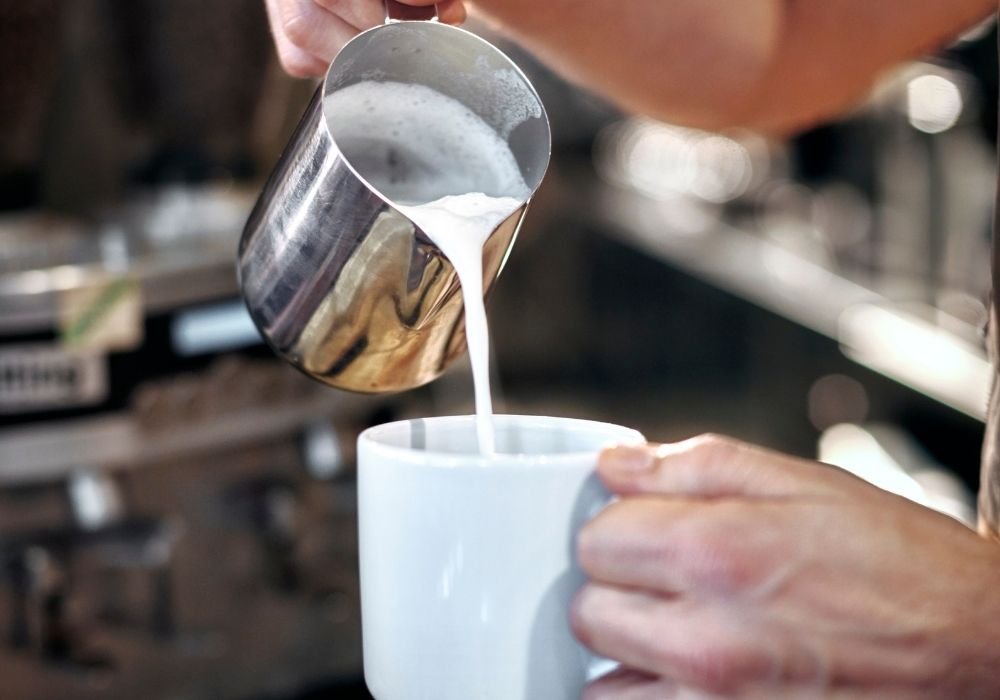
For me the coffee has to have a bit of a punch and certainly some depth to cut through the milk, last thing you want is a hint of coffee in your latte.
The best coffee beans for lattes and flat whites
1. Rwenzori by Routes Coffee Roasters: best overall for milk
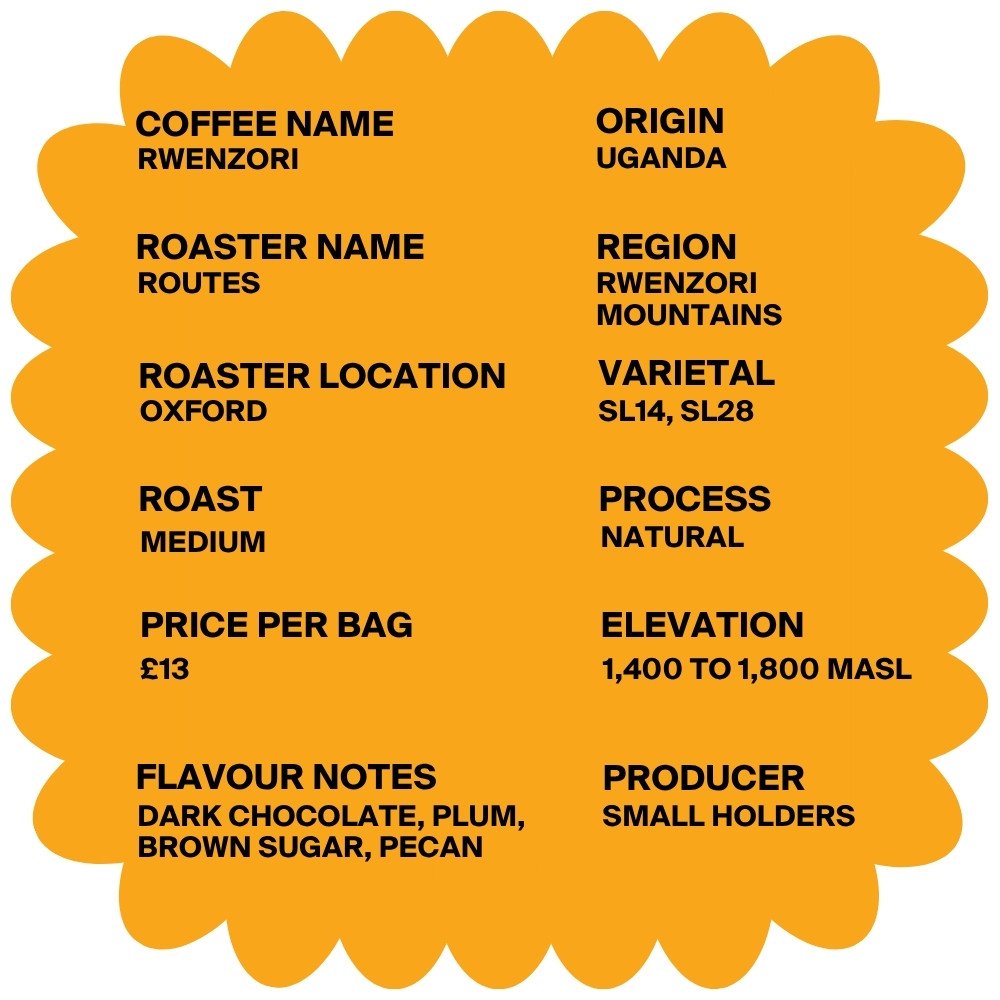

- Origin: Rwenzori Mountains, Uganda
- Process: Natural
- Variety: SL14, SL28
- Roast: Medium
- Flavour notes: Dark chocolate, plum, brown sugar, pecan
- Price when featured: £13
- Best for: Flat whites, lattes and anything in between
If you wrote a shopping list of flavours for a milk coffee, it would read a lot like this bag: dark chocolate, brown sugar and pecan, with plum for a bit of fruit. It’s a natural processed coffee grown between 1,400 and 1,800 metres, which gives it sweetness and enough weight to stay present in a big latte. Routes roast in Oxford, and this one went out in Batch box 167. I made a few bangin’ flat whites on my profitec espresso machine with this one – the plum and the dark chocolate cut through the milk brilliantly.
Read our Routes Coffee Roasters review.
2. Peaberry by Lost Sheep Coffee Roasters: best for lattes
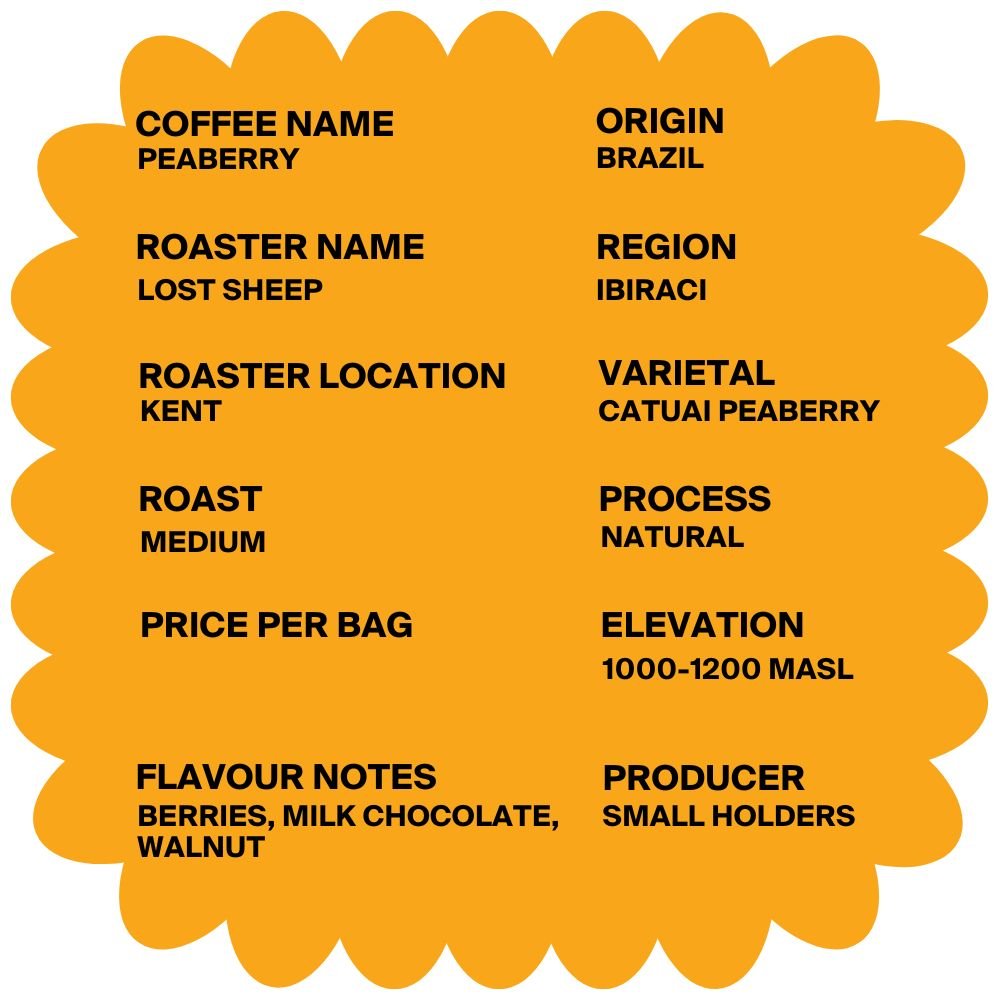

- Origin: Ibiraci, Brazil
- Process: Natural
- Variety: Catuai peaberry
- Roast: Medium
- Flavour notes: Berries, milk chocolate, walnut
- Best for: Big, comforting lattes
Brazil is the classic answer to the milk question, and this is why. Milk chocolate and walnut are flavours that only get better with steamed milk, and the lower growing altitude (1,000 to 1,200 metres) means gentle acidity that won’t fight the milk. Lost Sheep roast in Kent. We also rated this one as the best coffee for a stovetop latte in our guide to coffee for a moka pot.
Read our Lost Sheep Coffee Roasters review.
3. Copán by Lomond Coffee Roasters: best for flat whites
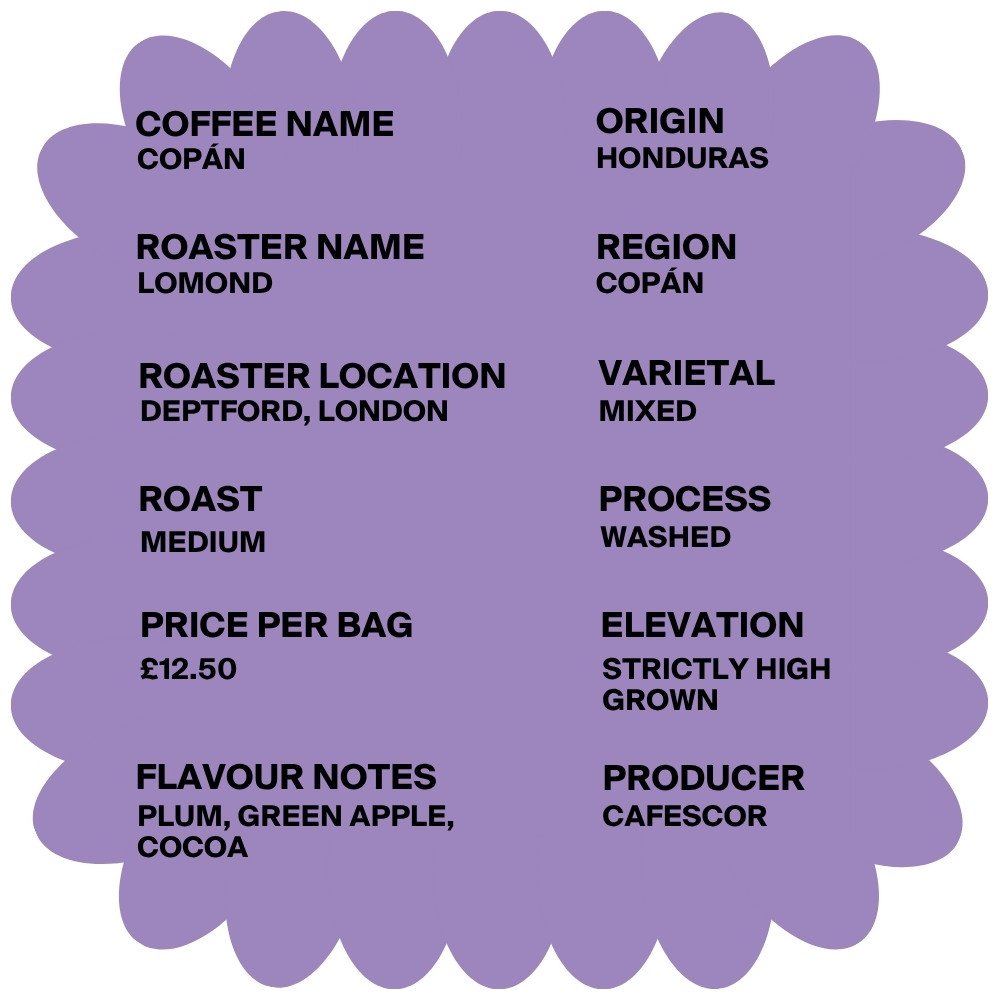

- Origin: Copán, Honduras
- Process: Washed
- Variety: Mixed
- Roast: Medium
- Flavour notes: Plum, green apple, cocoa
- Price when featured: £12.50
- Best for: Flat whites and cortados
A flat white has less milk than a latte, so you can get away with a coffee that has a bit more going on. Copán has a cocoa base to anchor it, with plum and a little green apple that should show up as freshness in a smaller, stronger drink. Lomond are an all female roastery working out of a railway arch in Deptford, south London, and this was the other half of box 167.
Read our Lomond Coffee Roasters review.
4. Tarrazu by Coffee Factory: best for cappuccinos
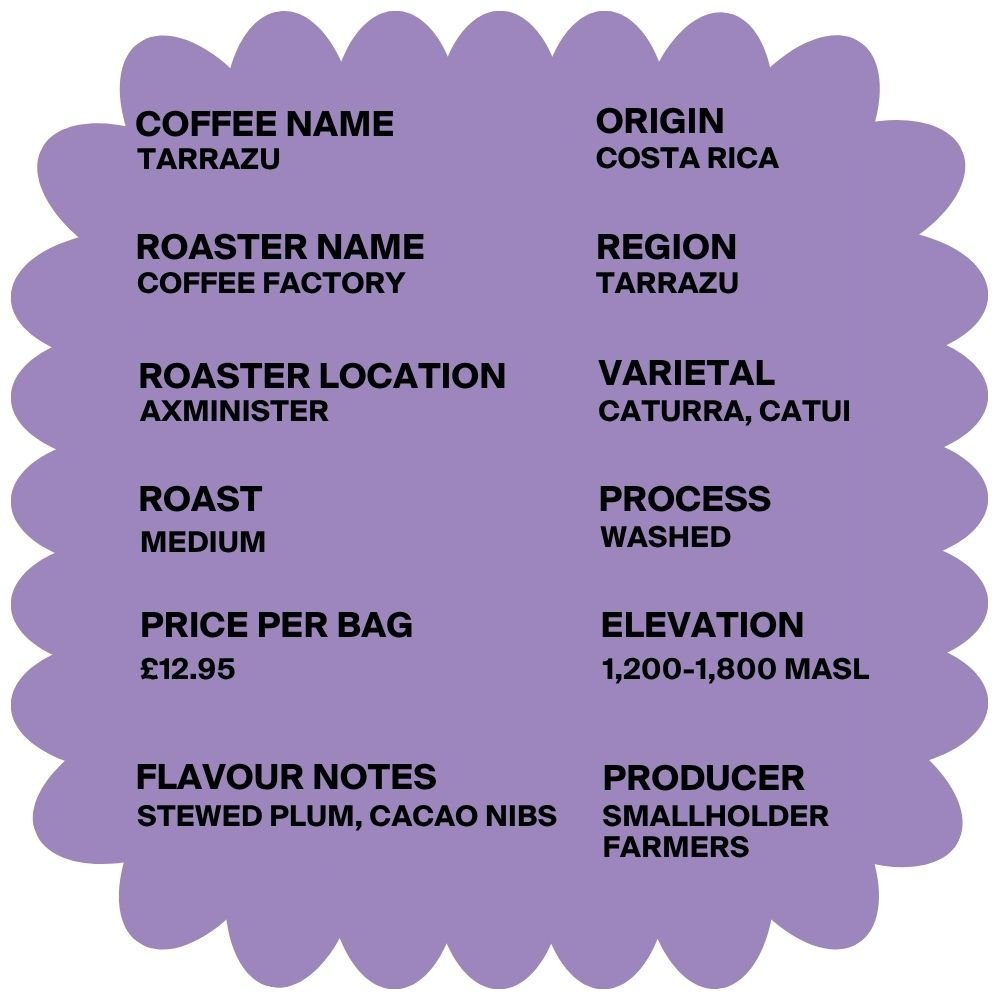
- Origin: Tarrazu, Costa Rica
- Process: Washed
- Variety: Caturra, Catuai
- Roast: Medium
- Flavour notes: Stewed plum, cacao nibs
- Price when featured: £12.95
- Best for: Cappuccinos
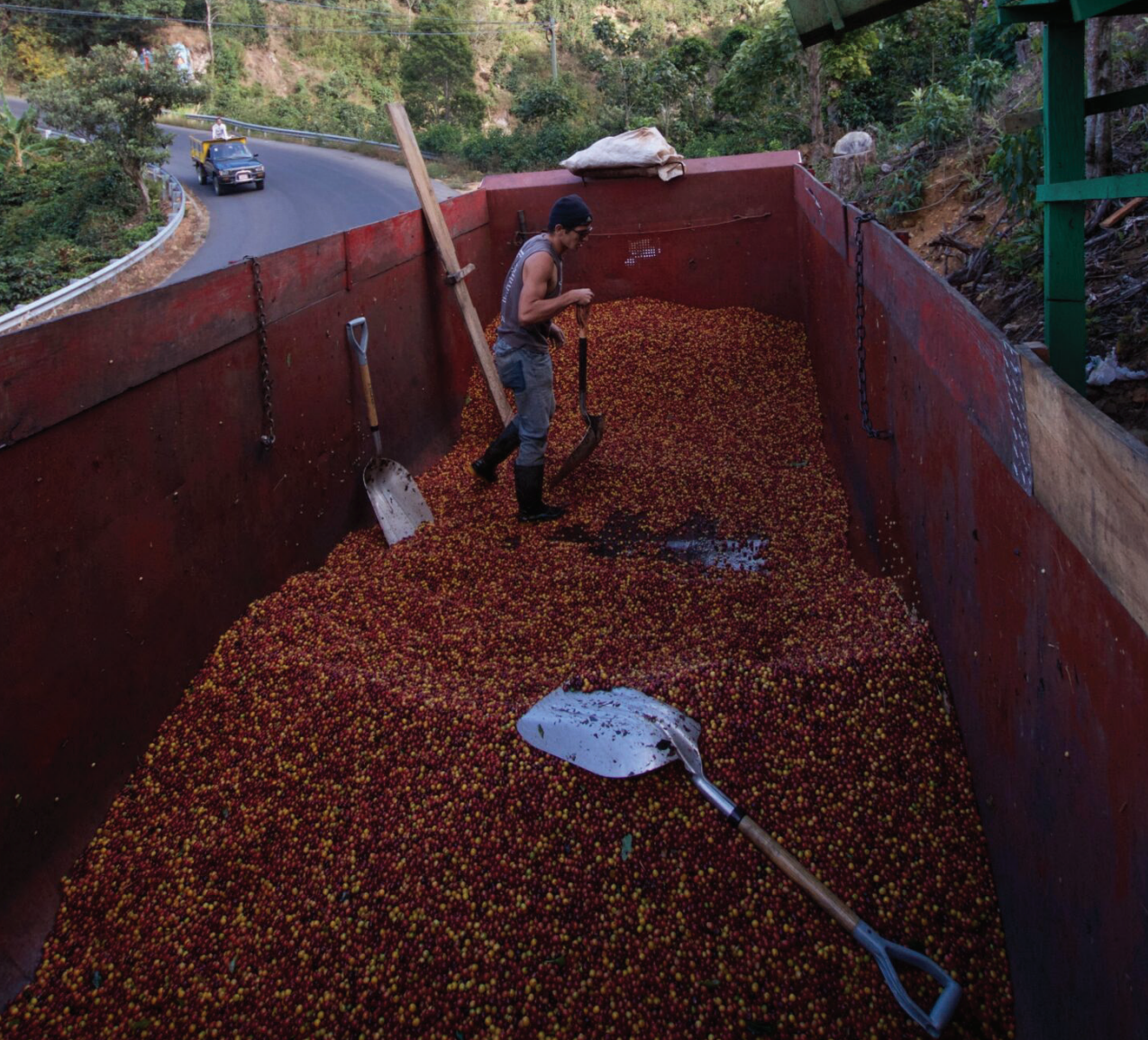
A cappuccino is mostly foam and air on top, so you taste the coffee more directly than in a latte. Stewed plum and cacao nibs is a deep, slightly bittersweet pairing that suits that, and it’s the natural partner for a dusting of chocolate if you’re that way inclined. Coffee Factory are a family run roastery in Axminster, roasting on a vintage Probat called Dorothy.
Read our Coffee Factory review.
5. Caranavi by Olfactory Coffee Roasters: best with oat milk
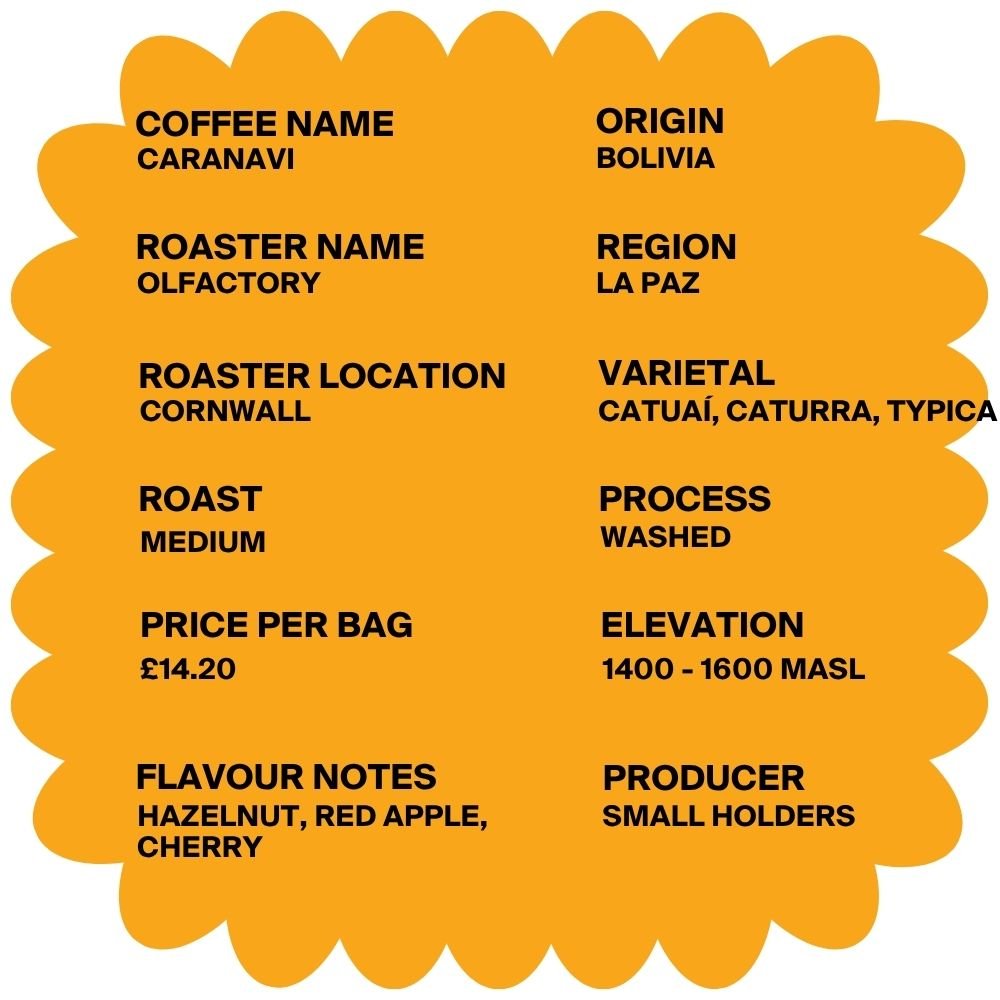
- Origin: La Paz, Bolivia
- Process: Washed
- Variety: Catuaí, Caturra, Typica
- Roast: Medium
- Flavour notes: Hazelnut, red apple, cherry
- Price when featured: £14.20
- Best for: Oat milk flat whites
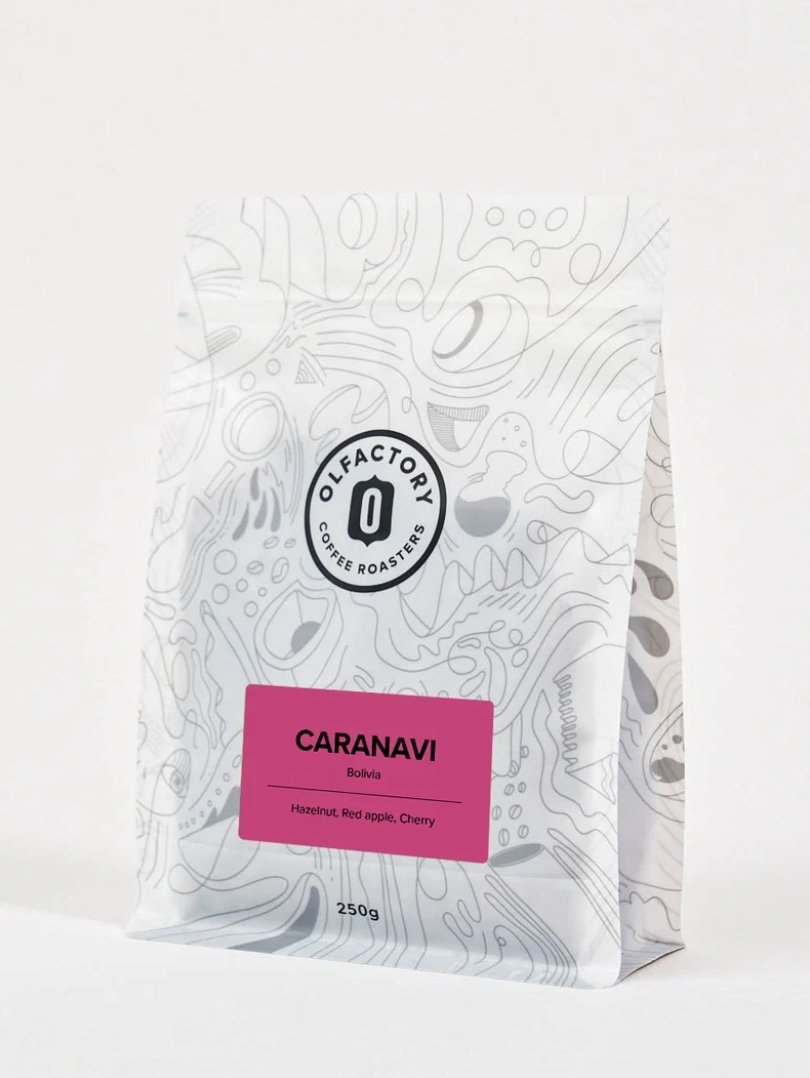
Oat milk has a cereal sweetness of its own, and nutty coffees tend to sit best with it. Hazelnut leads here, with red apple and cherry behind it. Bolivian coffee doesn’t turn up in the UK all that often, so this is a nice one to try if you fancy something a little different in your morning flat white. Olfactory have been roasting in Cornwall for almost a decade.
Read our Olfactory Coffee Roasters review.
6. Songbird by Kin Coffee Roasters: best value and best fruity latte
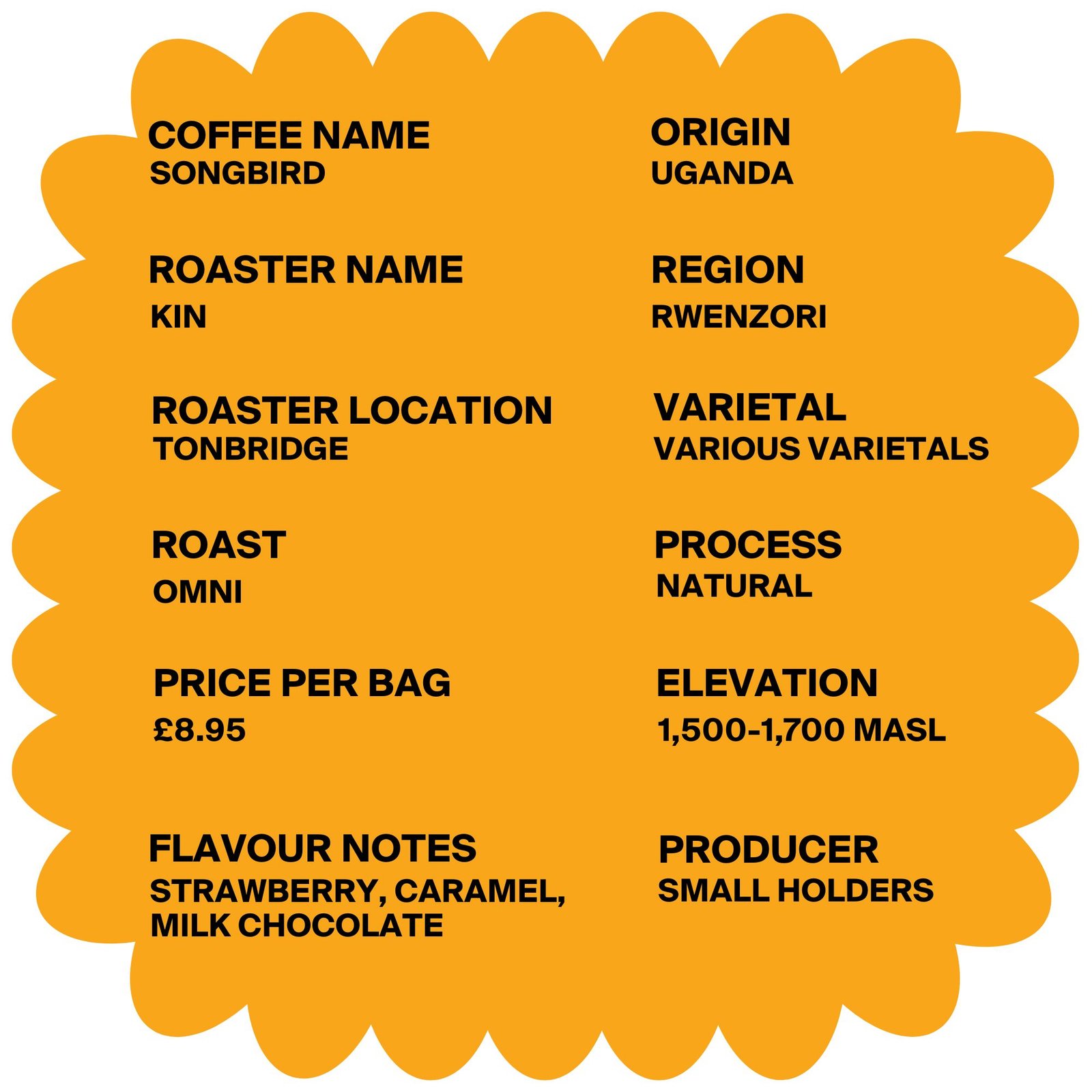

- Origin: Rwenzori, Uganda
- Process: Natural
- Roast: Omni (suits espresso and filter)
- Flavour notes: Strawberry, caramel, milk chocolate
- Price when featured: £8.95
- Best for: Lattes with a bit of fruit, and tight budgets
Not every milk coffee has to taste of chocolate and nothing else. Strawberry, caramel and milk chocolate in a latte lands somewhere close to strawberries and cream, which is no bad thing. The omni roast means it works in an espresso machine and a cafetière alike, and it was the cheapest bag on this list when we featured it. Kin was founded in 2019 by partners Greg and Kate and roasts in Tonbridge.
Read our Kin Coffee Roasters review.
7. Chilchos Valley by Missing Bean: best for bean to cup machines
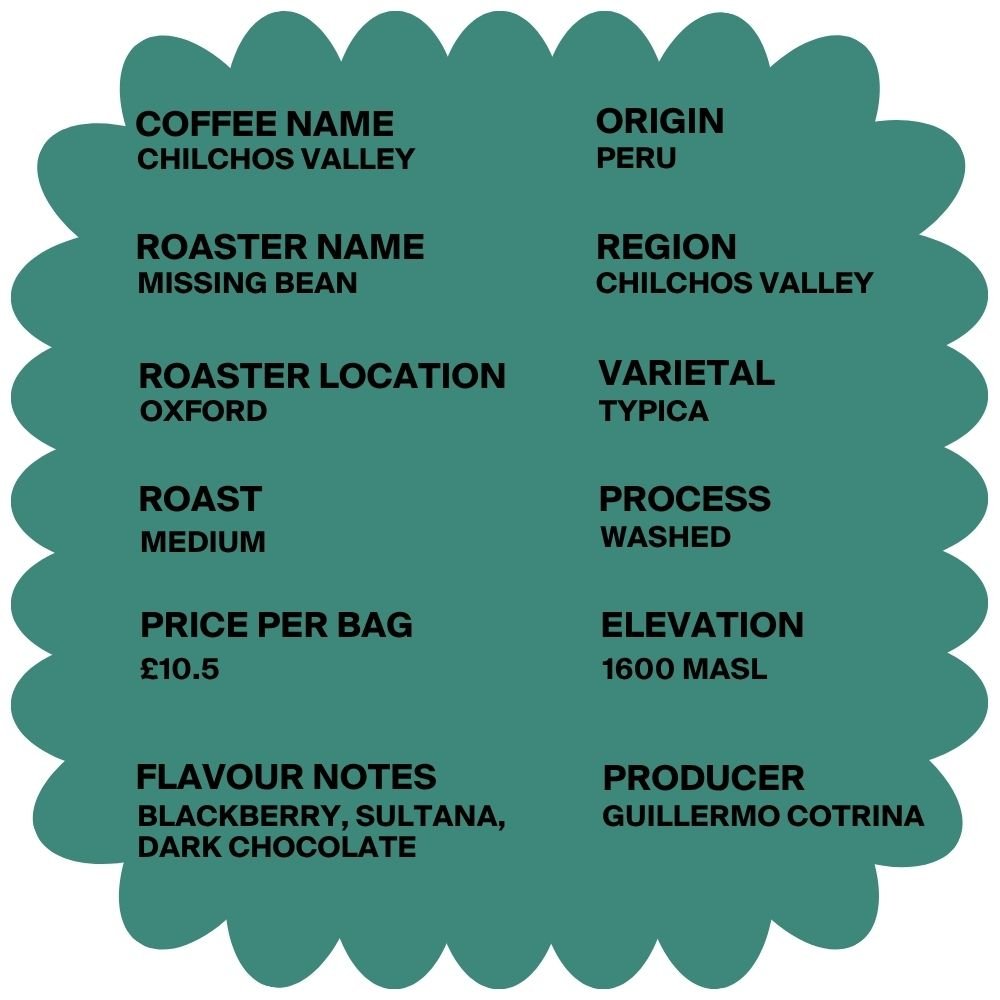
- Origin: Chilchos Valley, Peru
- Process: Washed
- Variety: Typica
- Roast: Medium
- Flavour notes: Blackberry, sultana, dark chocolate
- Price when featured: £10.50
- Best for: Bean to cup machines and everyday lattes
Bean to cup machines reward a straightforward, medium roasted coffee with plenty of chocolate, and they are much less happy with anything very light or very dark and oily. Dark chocolate with blackberry and sultana fits the brief nicely, at a price that makes sense for a machine that gets through a lot of beans. Missing Bean are the Oxford roastery behind it, working directly with producer Guillermo Cotrina.
Latte, flat white or cappuccino: does the bean change?
A little. All three start with the same espresso, so the difference is how much milk and foam sits on top of it.
| Drink | Milk | What that means for the bean |
|---|---|---|
| Flat white | Least milk, thin layer of silky foam | The coffee is front and centre. Cocoa based coffees with a bit of fruit shine here. |
| Cappuccino | Similar milk, much more foam | You taste the coffee clearly through the foam. Go for deeper, bittersweet notes. |
| Latte | Most milk | The coffee needs body and sweetness to be noticed. Chocolate, nut and caramel are the safe bets. |
If you’re not sure which is which, we’ve written about what a flat white actually is and how to make a latte at home. The macchiato is its own small argument.
Single origin or blend for milk drinks?
Either. Most cafés use an espresso blend for milk because blends are built to taste the same every week, usually with a Brazilian base for chocolate and body. A single origin does the same job when it has the right flavour profile, and every coffee on this list is one. The advantage of single origins is that your flat white tastes a little different each time you open a new bag, which is rather the point of a coffee subscription.
For more on choosing beans for your machine, see our guide to the best coffee beans for espresso.
Light, medium or dark roast for a latte?
Medium is the safest answer, and medium dark if you like your latte to taste properly of coffee. Light roasts keep more acidity, and acidity plus milk is where sourness creeps in. Supermarket style dark roasts go the other way: the roast flavour takes over and you get bitterness that even milk struggles to hide.
Best coffee beans for oat milk and other plant milks
Plant milks bring their own flavour, so match the coffee to the milk. Oat is sweet and cereal like, and suits nutty, chocolatey coffees such as the Caranavi and the Peaberry above. Plant milks are also more likely to split when they meet an acidic coffee, which is another reason to steer clear of very bright, citrus led beans. Barista versions of oat and soya milk are made to steam and hold together better than the standard cartons.
Getting the best out of your beans at home
- Grind fresh. Espresso is the least forgiving brew method for stale coffee. If you have a grinder, buy whole beans; our guide to grinding coffee beans covers the settings.
- Get the espresso right first. Milk hides a lot, but not a sour or bitter shot. Our how to make espresso at home guide walks through dose, yield and time.
- Don’t scald the milk. Overheated milk loses its sweetness and takes the coffee down with it. A proper milk frothing jug makes it far easier to judge by touch.
- No steam wand? A handheld or electric milk frother and a moka pot will get you surprisingly close.
- Use the right cup. A flat white in a pint mug is a latte with ideas above its station. Here are our favourite flat white cups.
Frequently asked questions
What are the best coffee beans for a latte?

Medium or medium dark roasted beans with chocolate, nut and caramel flavour notes and low acidity. Brazilian coffees are the classic choice, and coffees from Honduras, Peru and Uganda with similar notes work just as well. Our pick for lattes is the Peaberry from Lost Sheep Coffee Roasters.
What are the best coffee beans for a flat white?
A flat white has less milk than a latte, so you can choose a coffee with a bit more character: a cocoa or chocolate base with a touch of fruit such as plum or berry. Avoid very light, citrus led coffees, which can taste sour with milk.
Do I need special coffee beans for cappuccino?
No. Any coffee that suits a flat white or latte will make a good cappuccino. Because a cappuccino has more foam and you taste the espresso more directly, deeper notes like dark chocolate and cacao tend to work best.
Is dark roast or medium roast better with milk?
Medium roast is the safest choice, and medium dark suits people who like a stronger coffee flavour. Very dark roasts can taste bitter and smoky even with milk, and light roasts often taste thin or sour.
Can I use the same beans for espresso and milk drinks?
Yes. A latte or flat white is espresso with milk, so any bean you enjoy as espresso can be used. Coffees with more body and sweetness simply hold their flavour better once the milk goes in.
What coffee beans are best for a bean to cup machine?
Medium roasted beans with chocolate and nut notes. Avoid very dark, oily beans, which can clog the grinder over time, and very light roasts, which bean to cup machines struggle to extract well.
The easiest way to find your milk coffee
The honest truth is that the best coffee for your flat white depends on your machine, your milk and how strong you like it. The quickest way to find out is to try a few, and keep a note of the ones that make you want a second cup. You can see everything we’ve sent so far in the box archive.
Want coffees like these without the guesswork? Every fortnight we send two speciality coffees from different independent UK roasters, whole bean or ground for espresso, with tasting notes on every bag. Use BATCHBREW10 for 10% off your first box. Start your subscription

